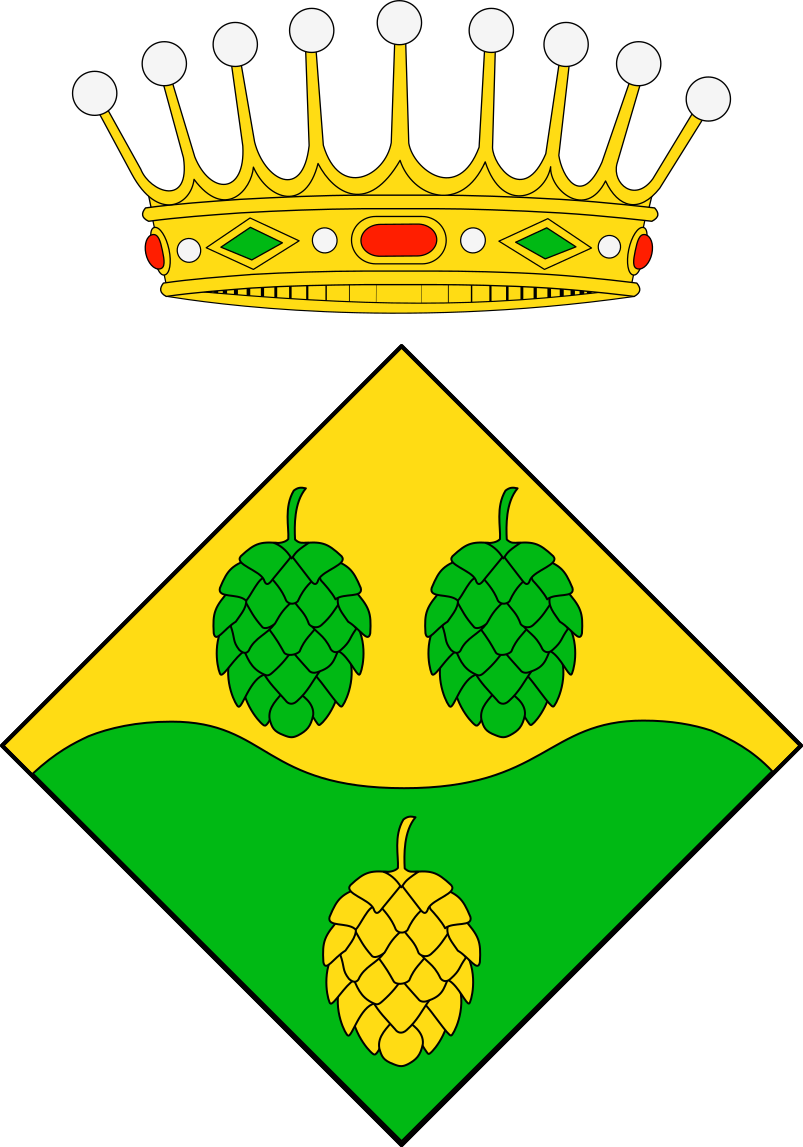
 Vallfogona de Ripollès
El Cobert — Vallfogona weather station


The village
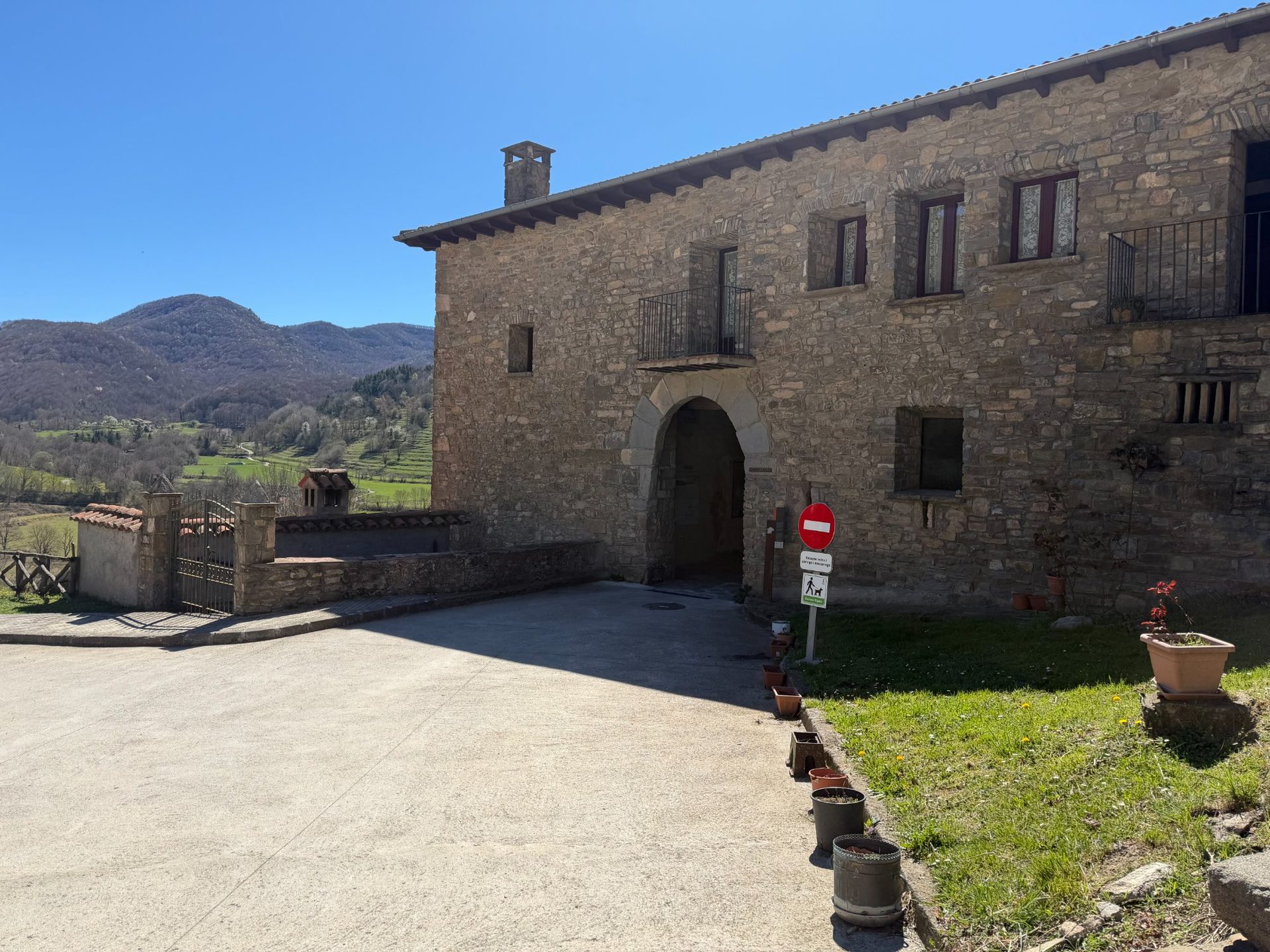
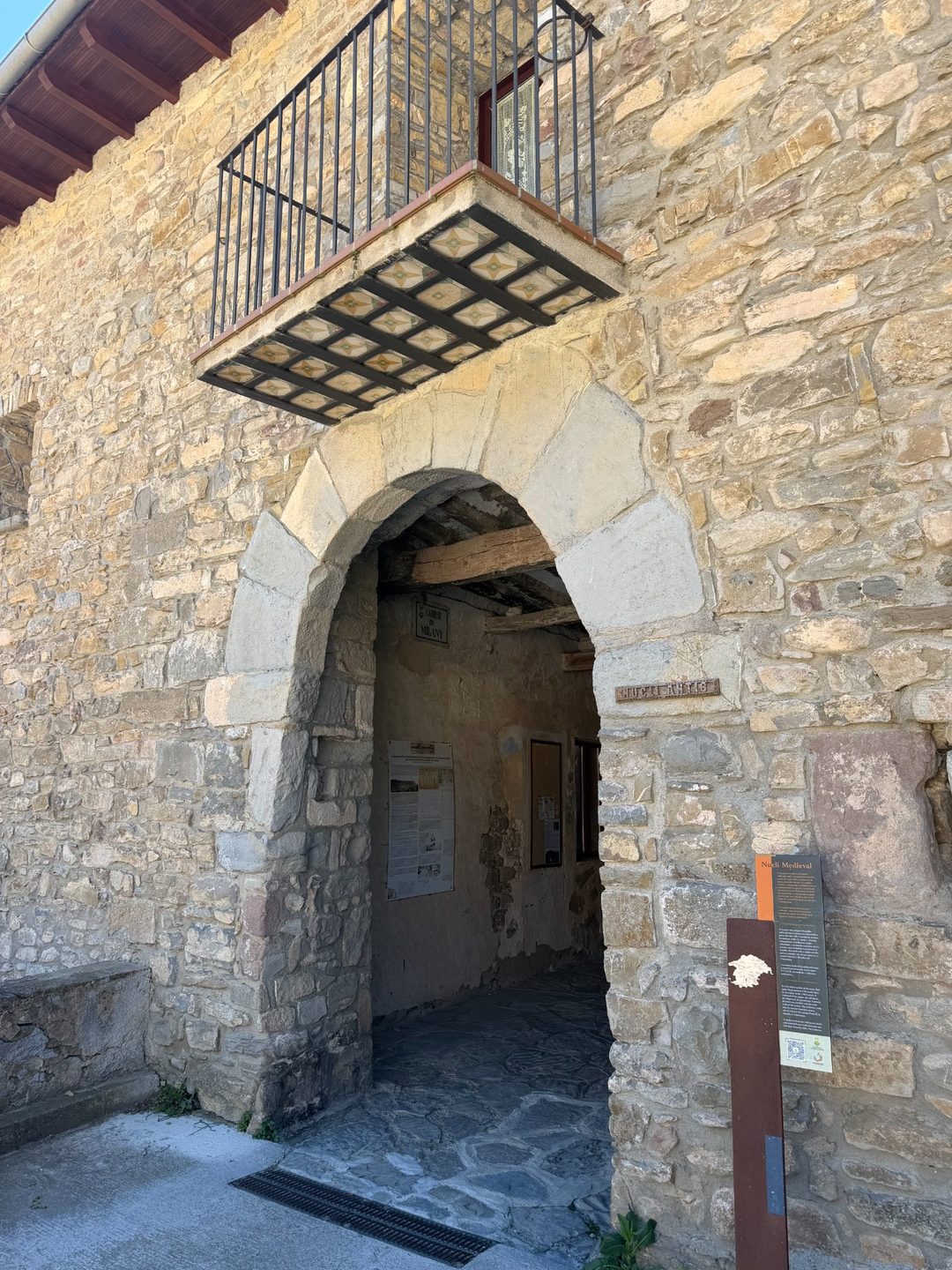
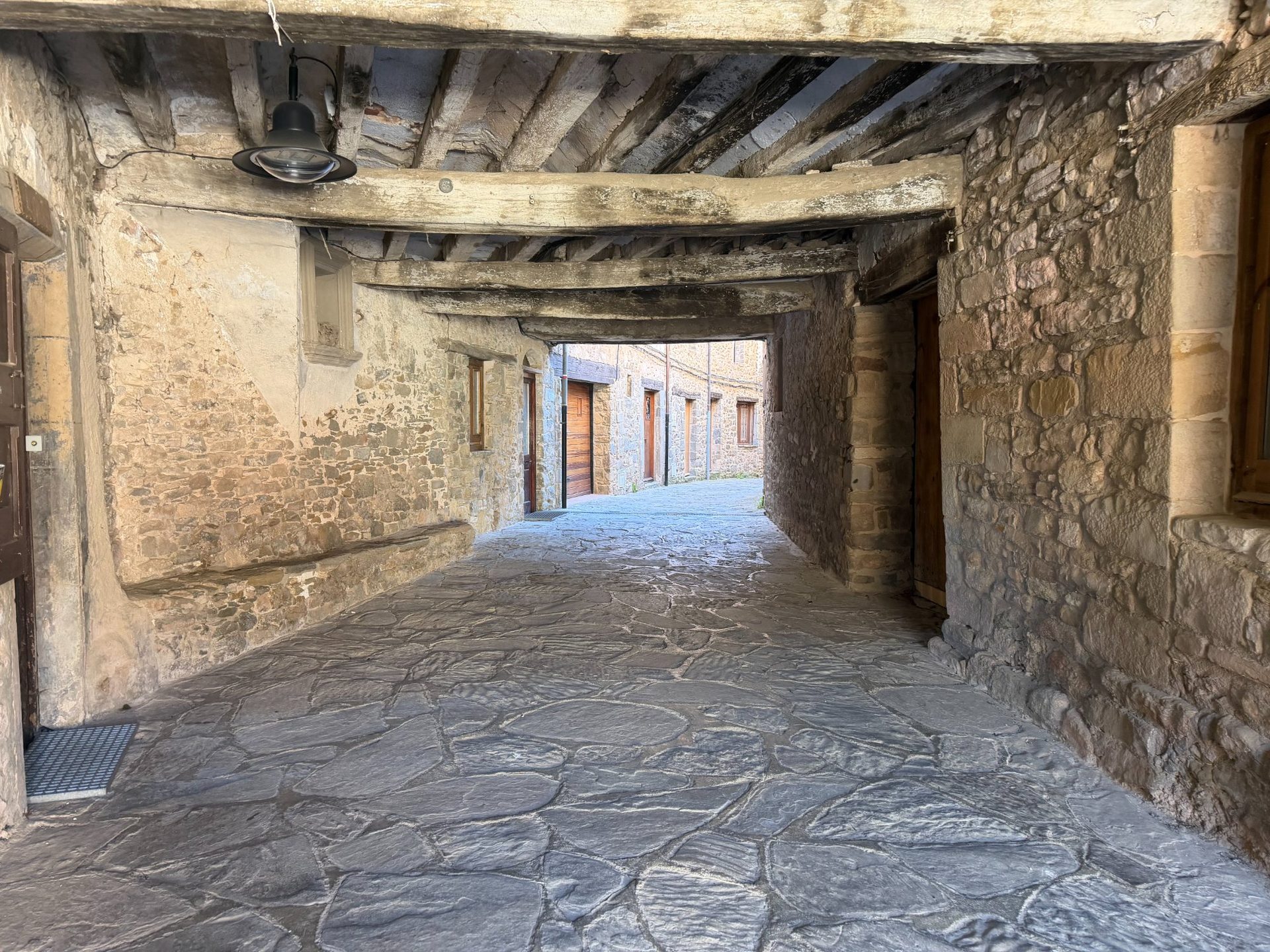
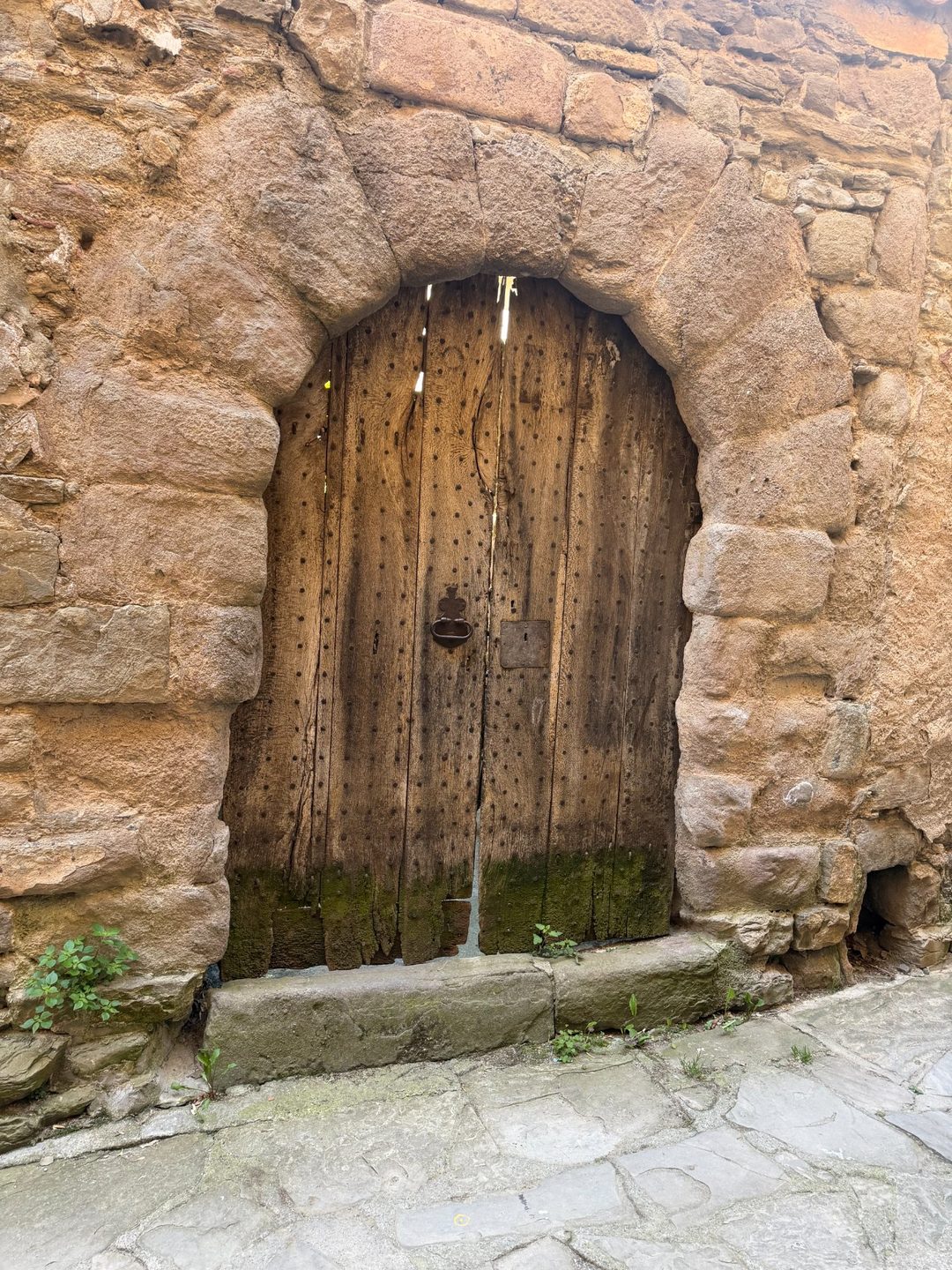
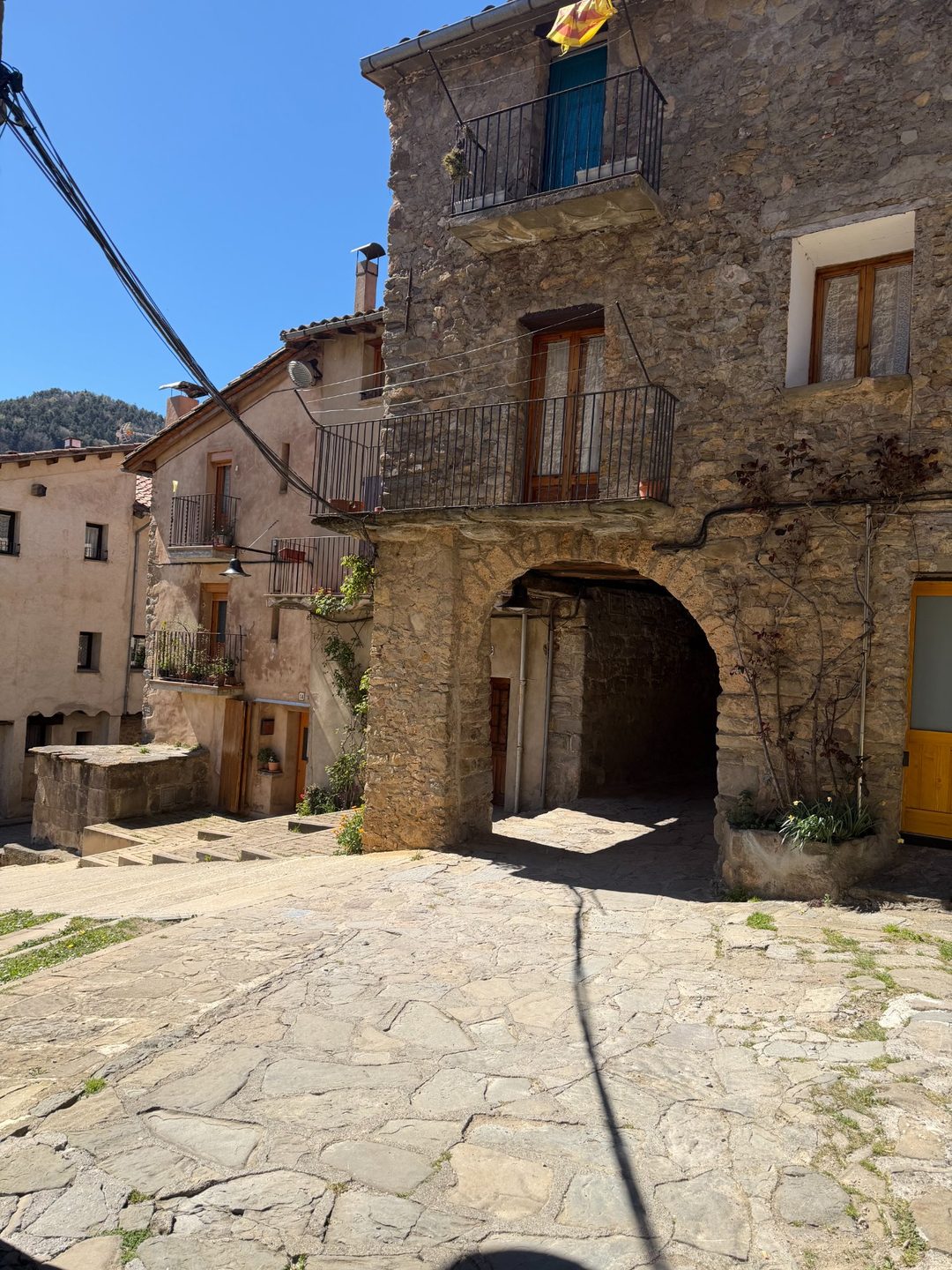
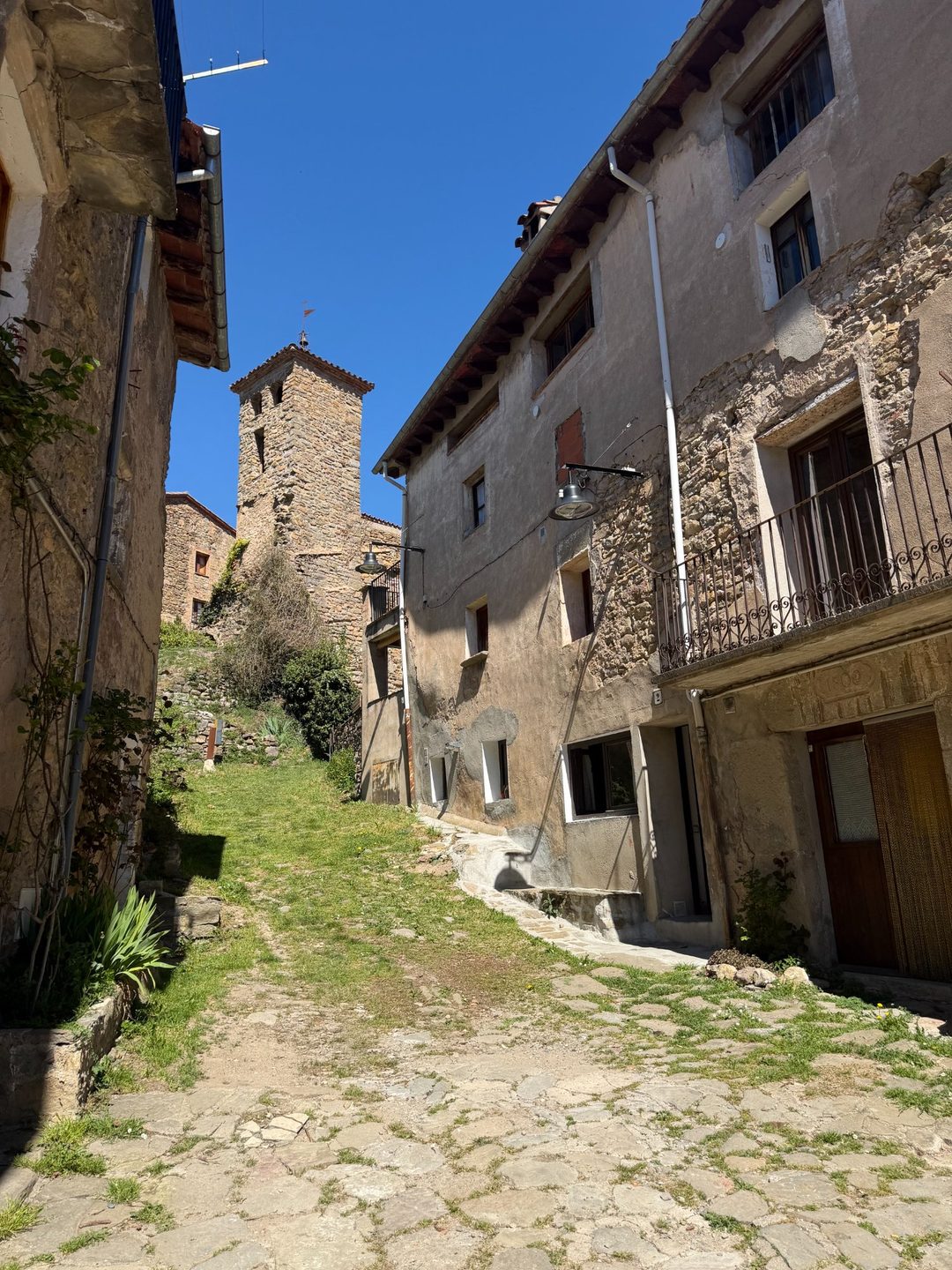
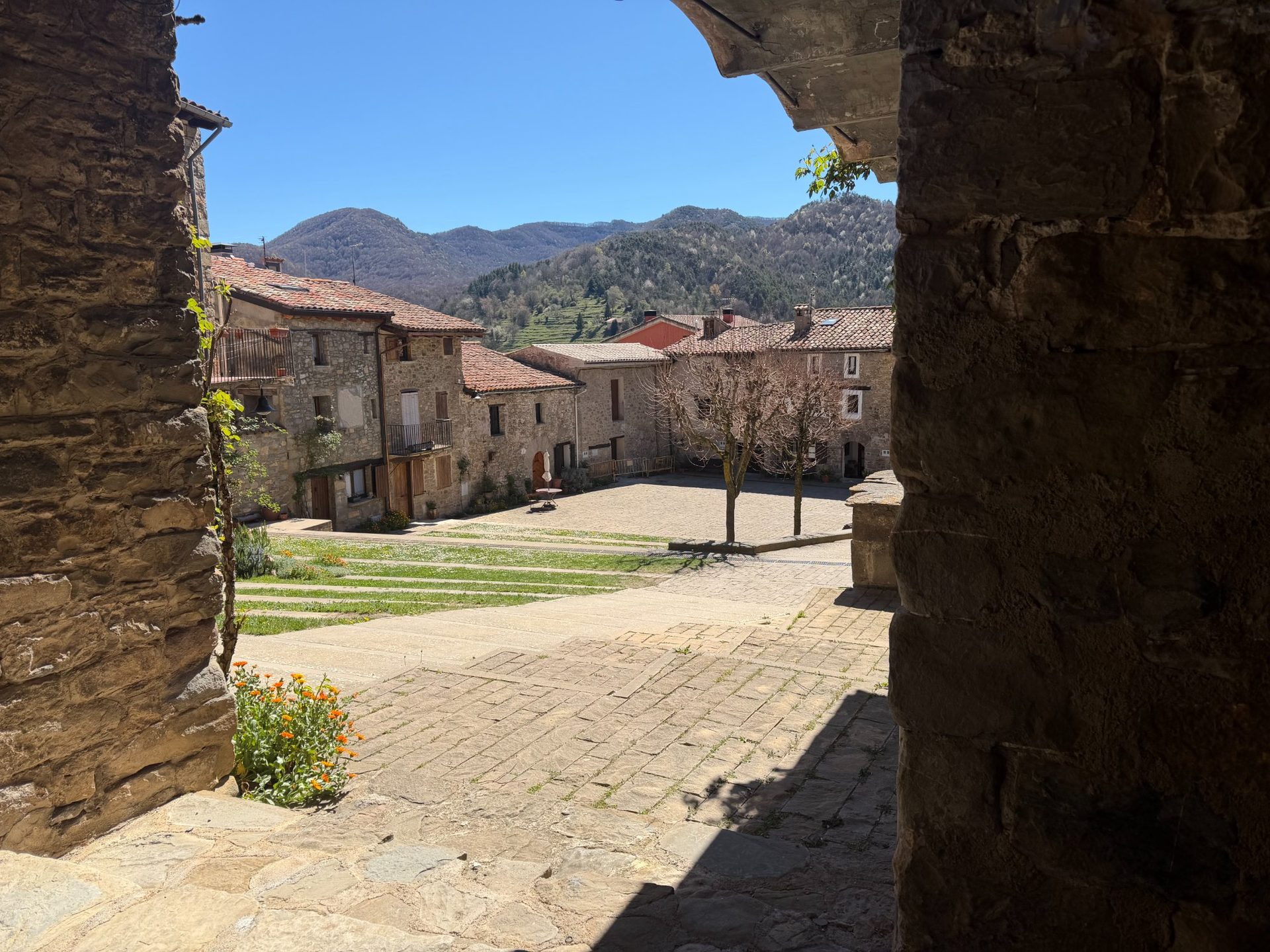
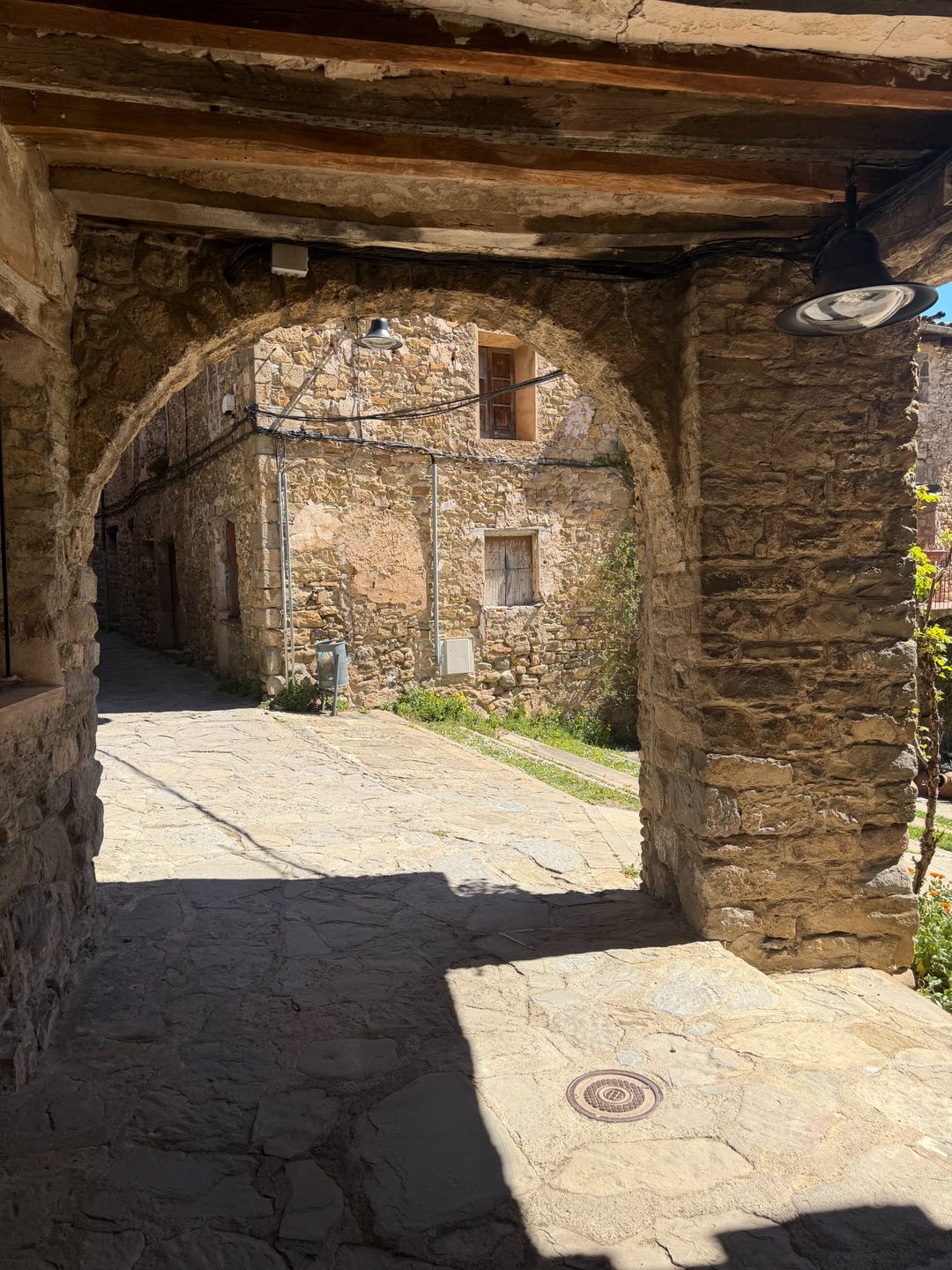
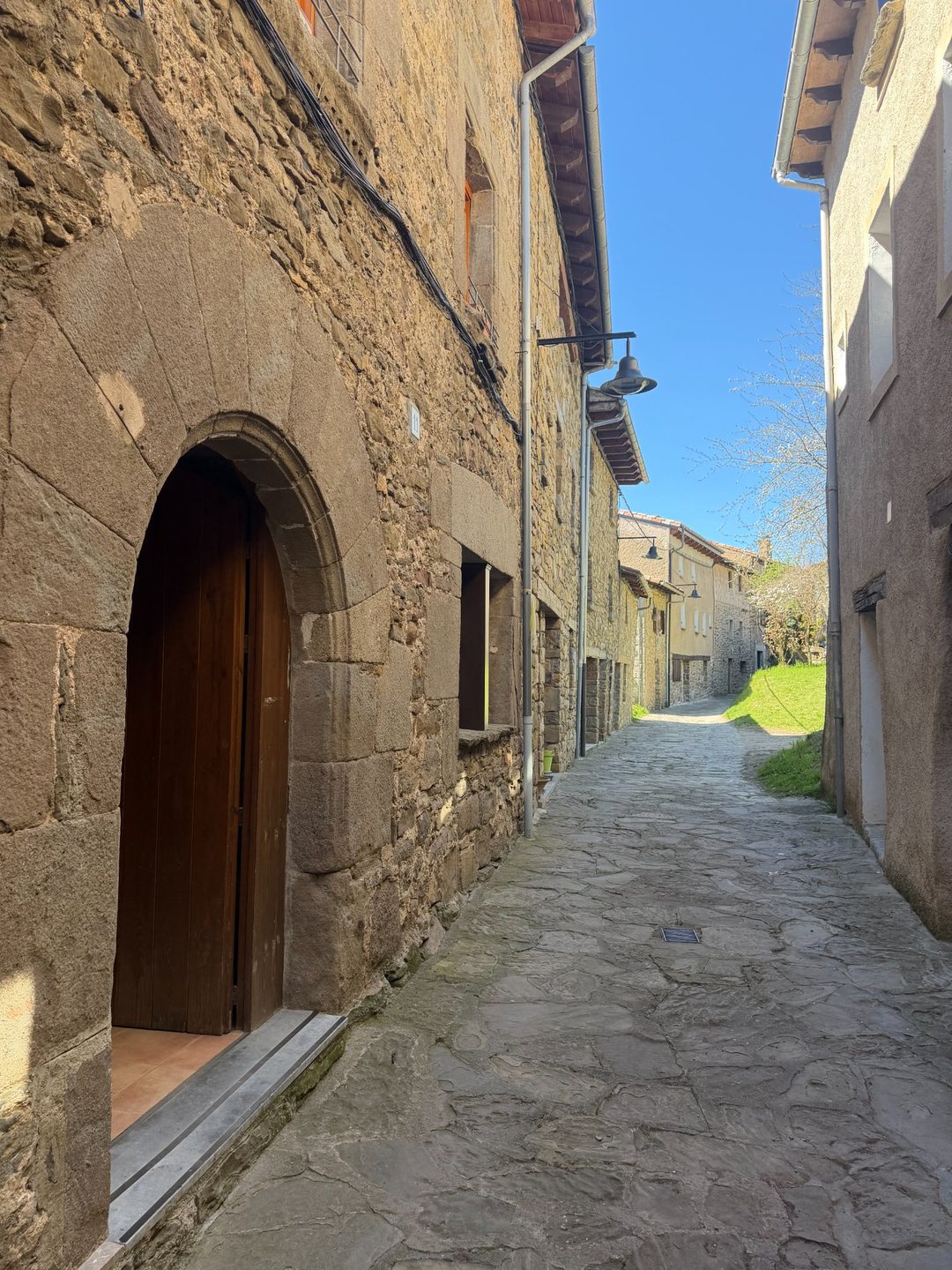
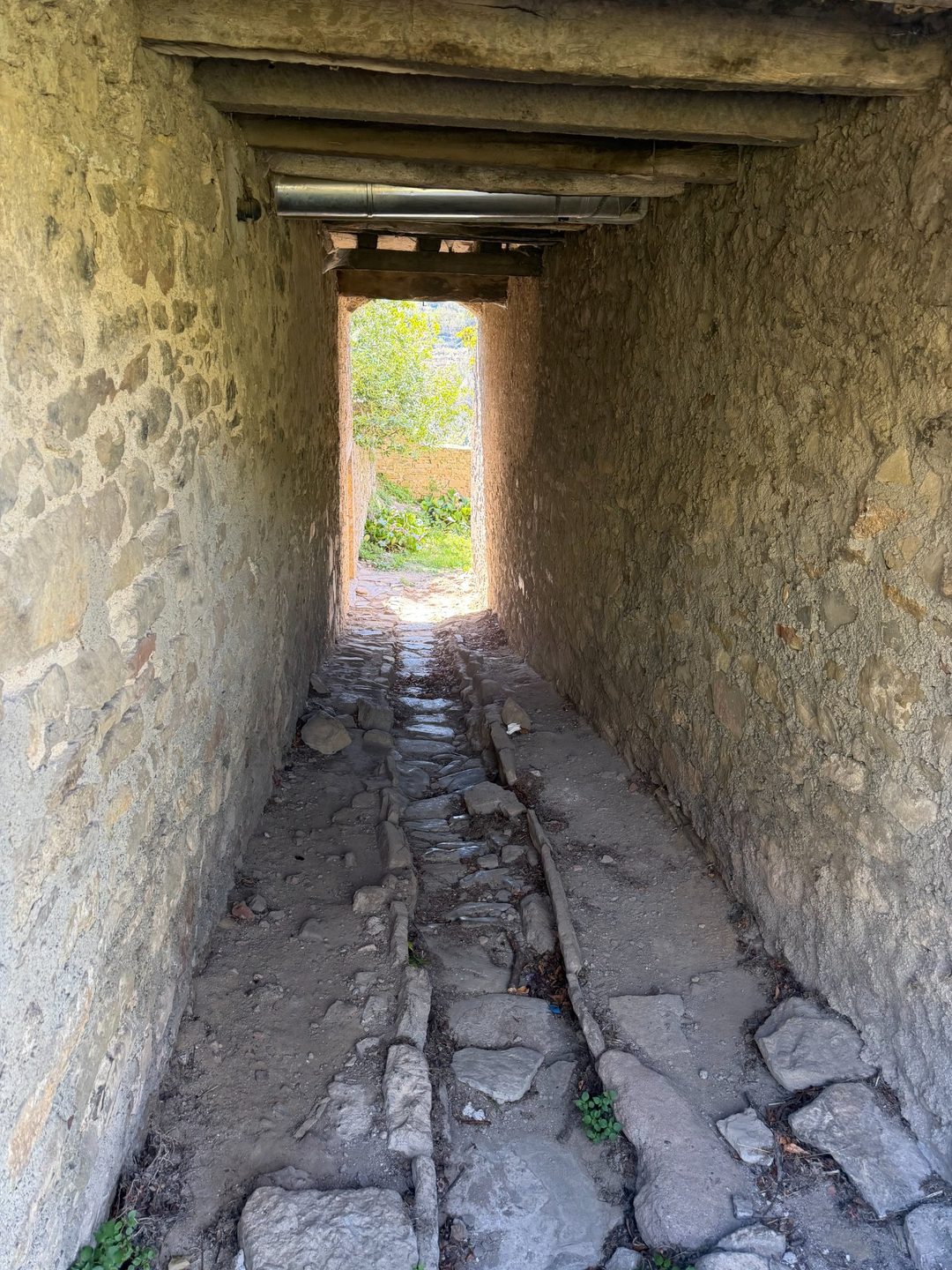
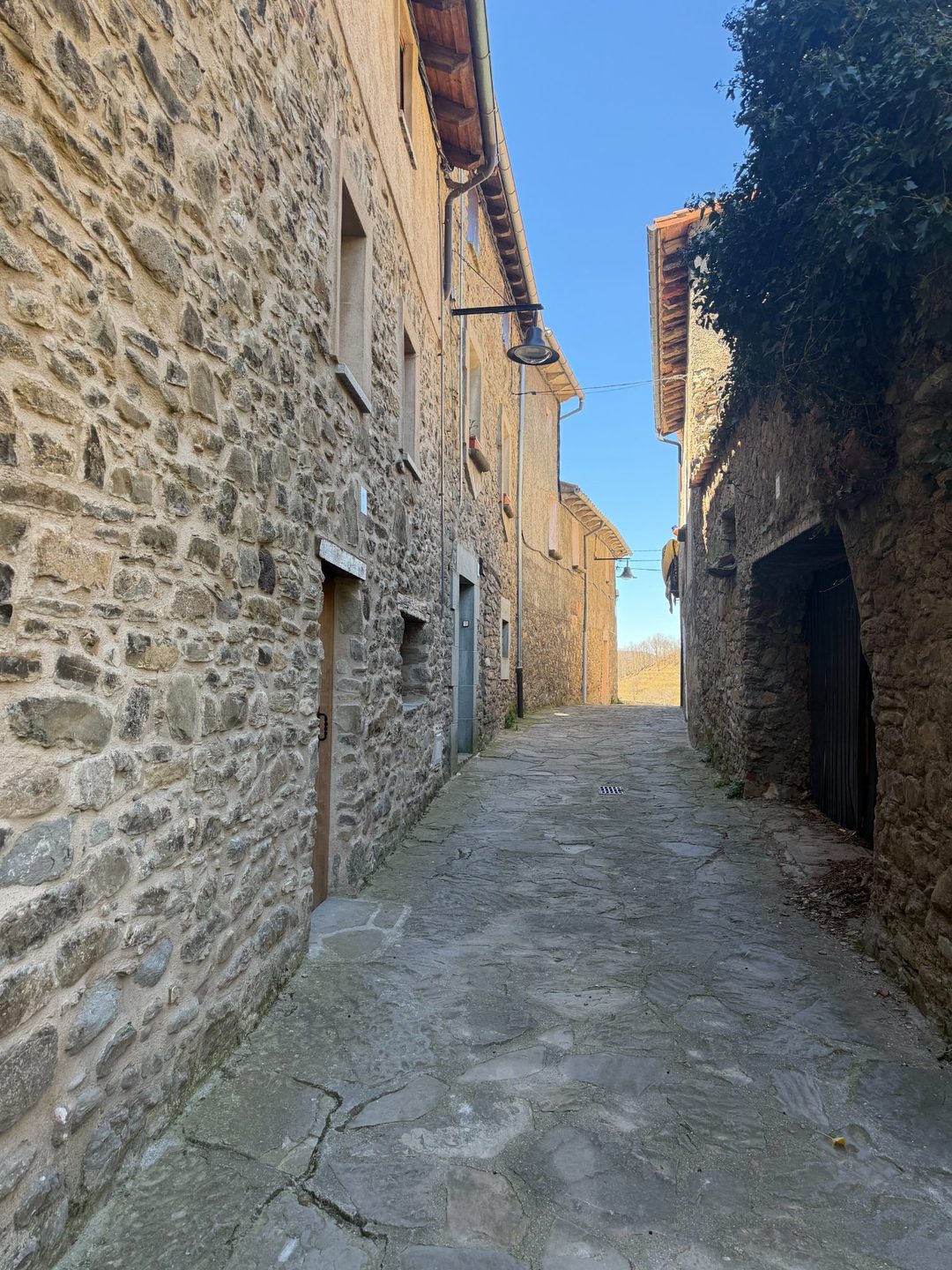
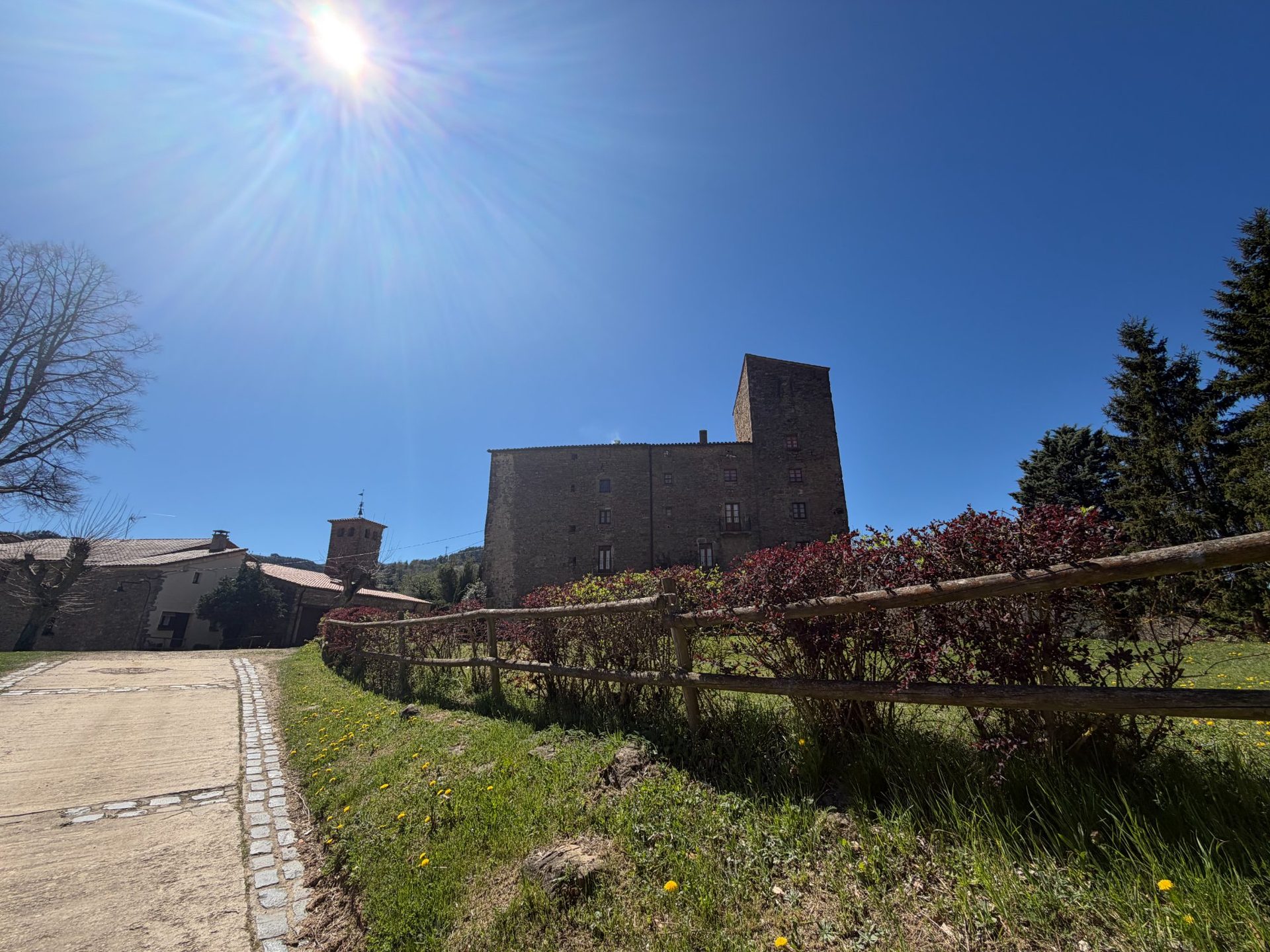
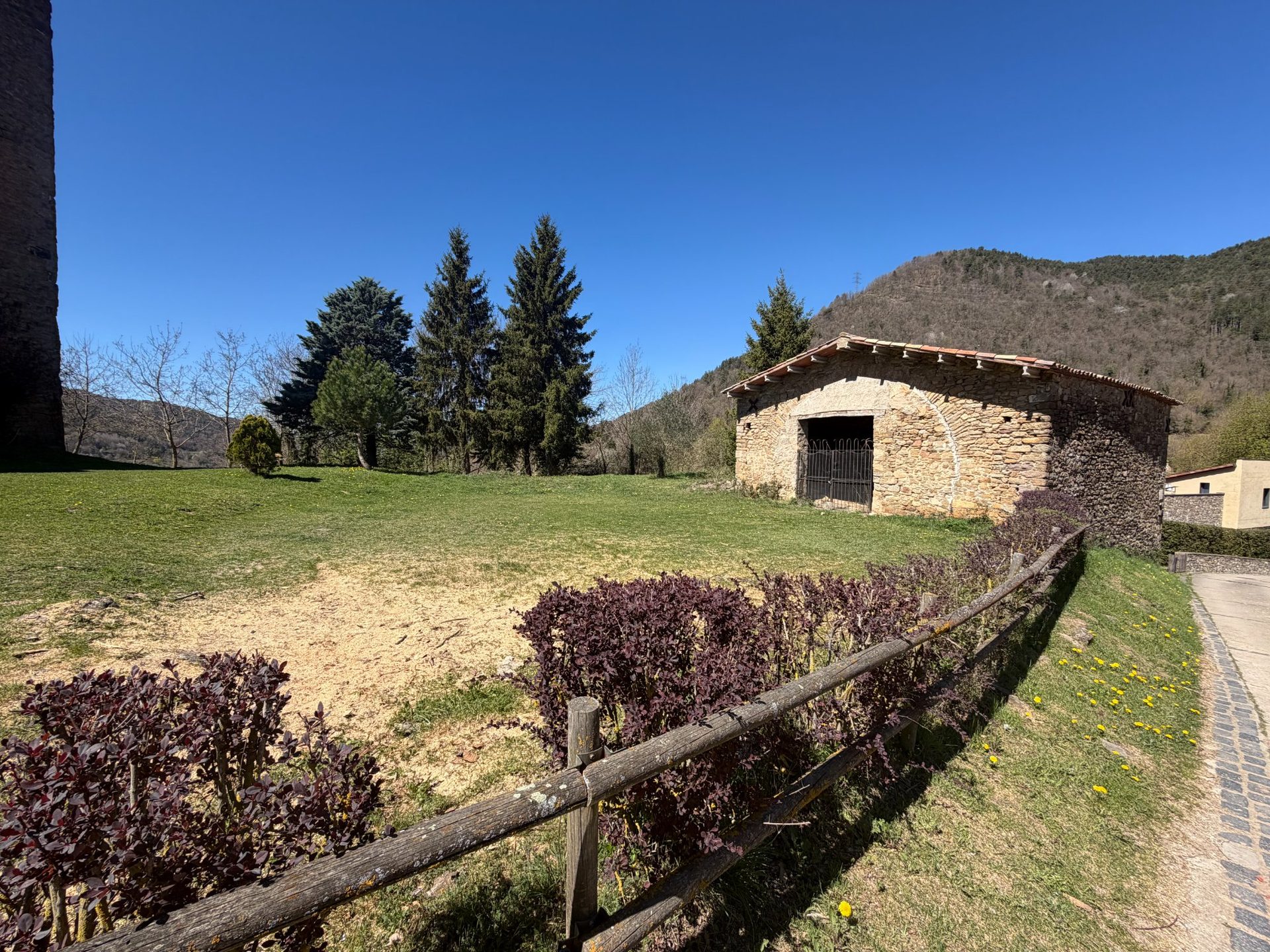
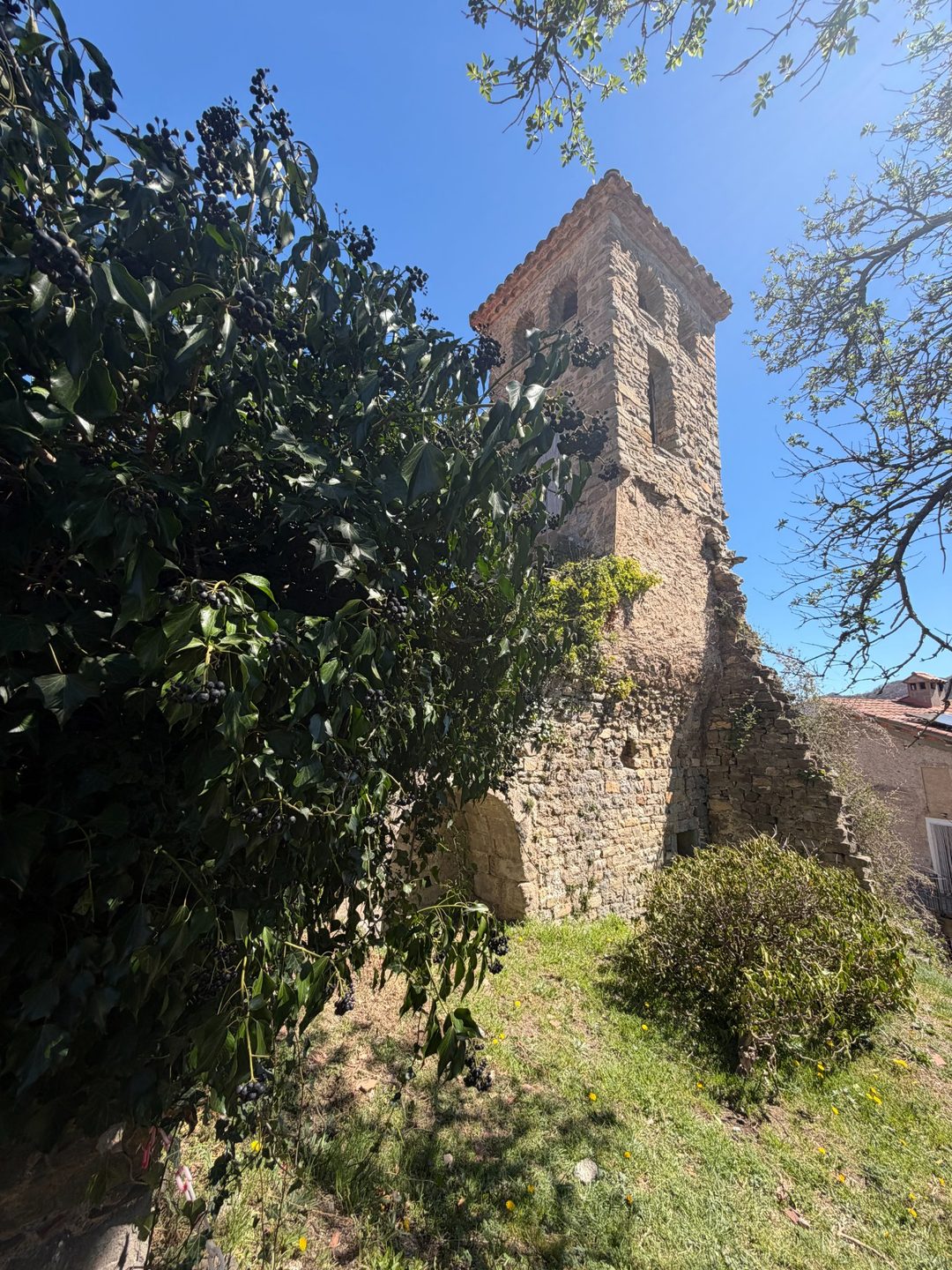
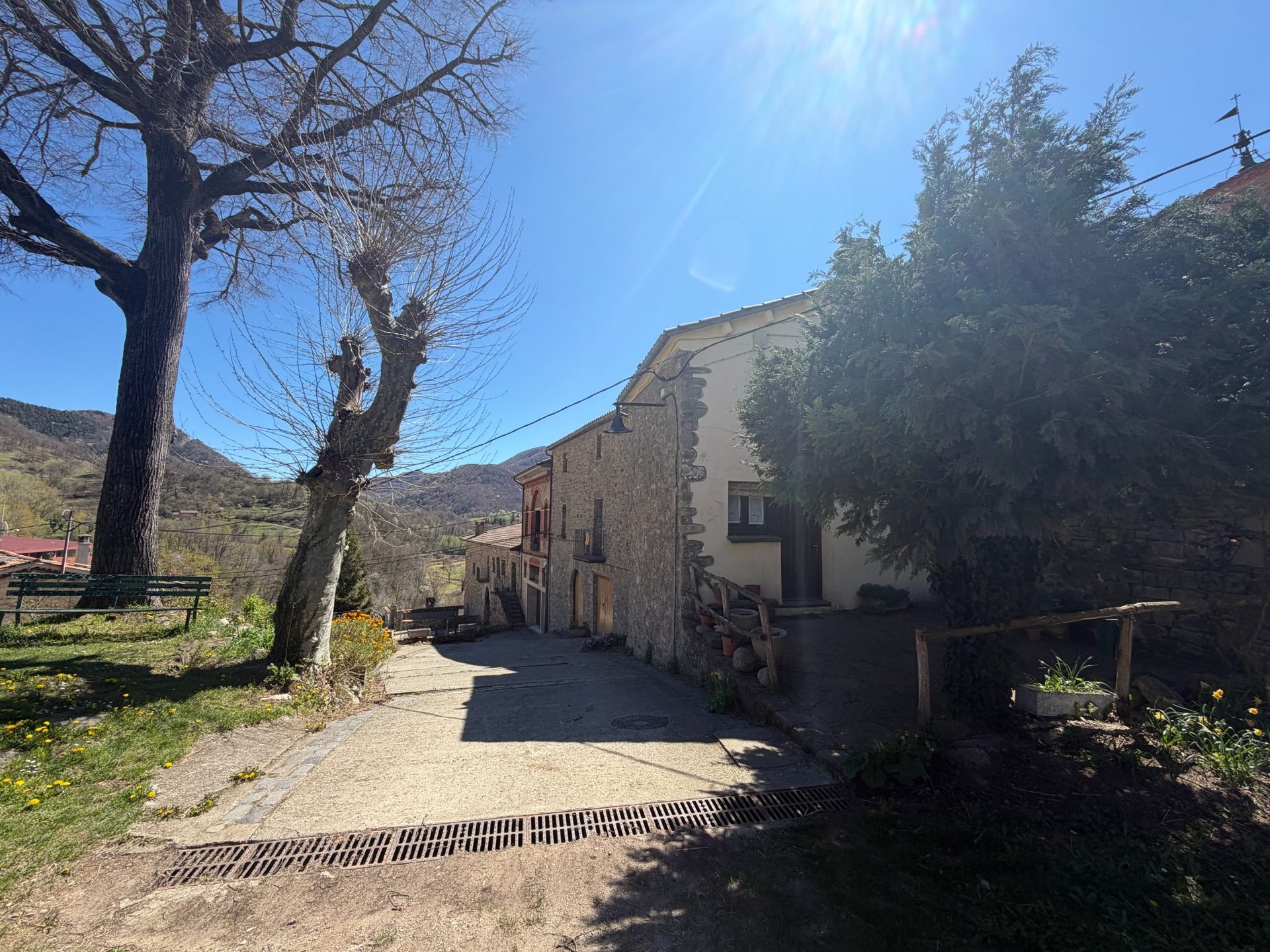
This is the oldest part of the village, built under the shelter of the castle from the 13th century onwards. It consisted of the square, the old streets, the chapel and the inn. In the past the village was walled, and the outer walls of the houses themselves formed the ramparts. The enclosure could only be entered through three gateways, one of which is the present-day Portal de la Muralla, or Tramuntana gate.
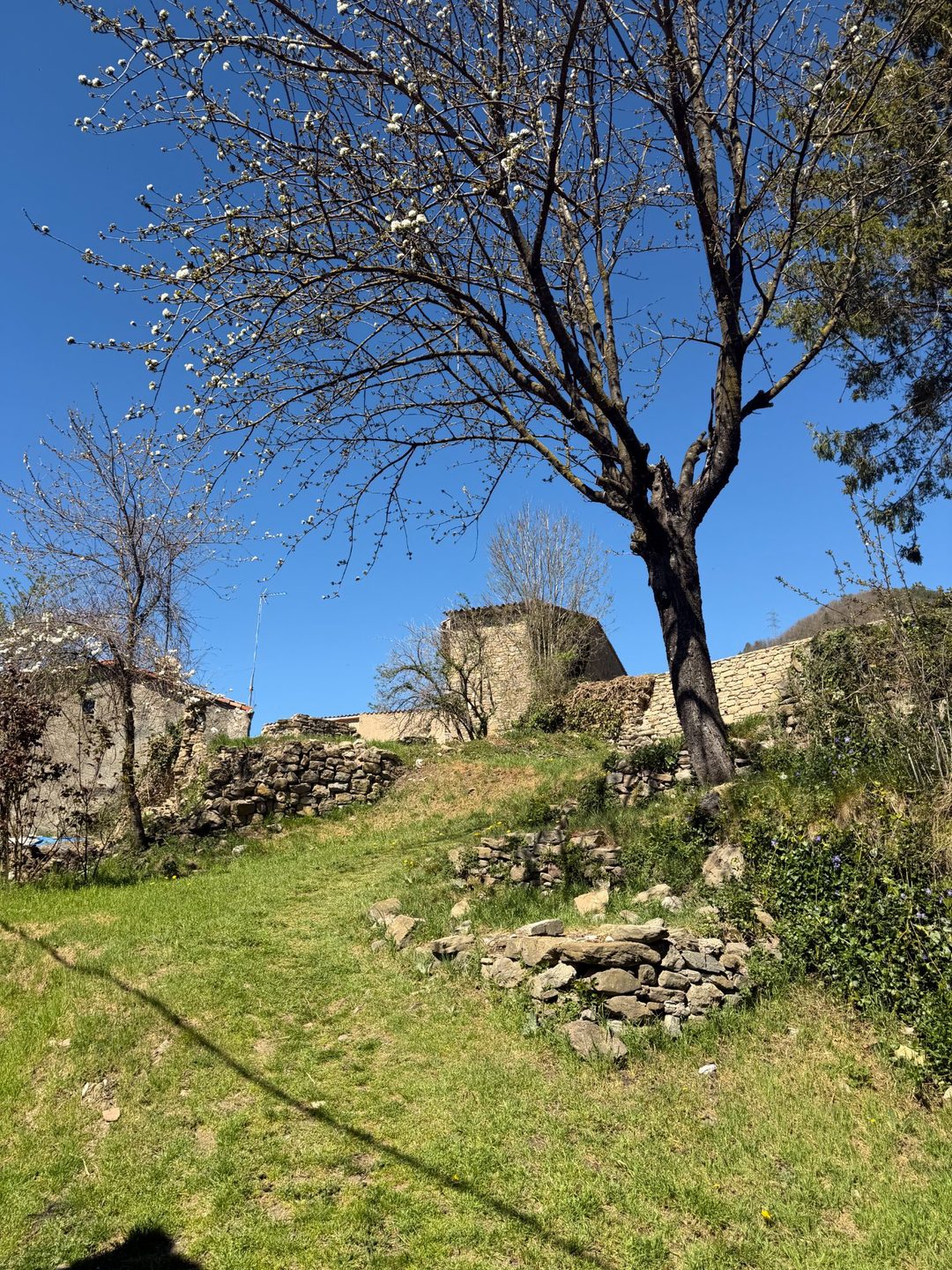
A medieval quarter of flagstone streets and beautifully restored houses dating from the 16th–17th centuries, with centuries-old lintels and balconies.
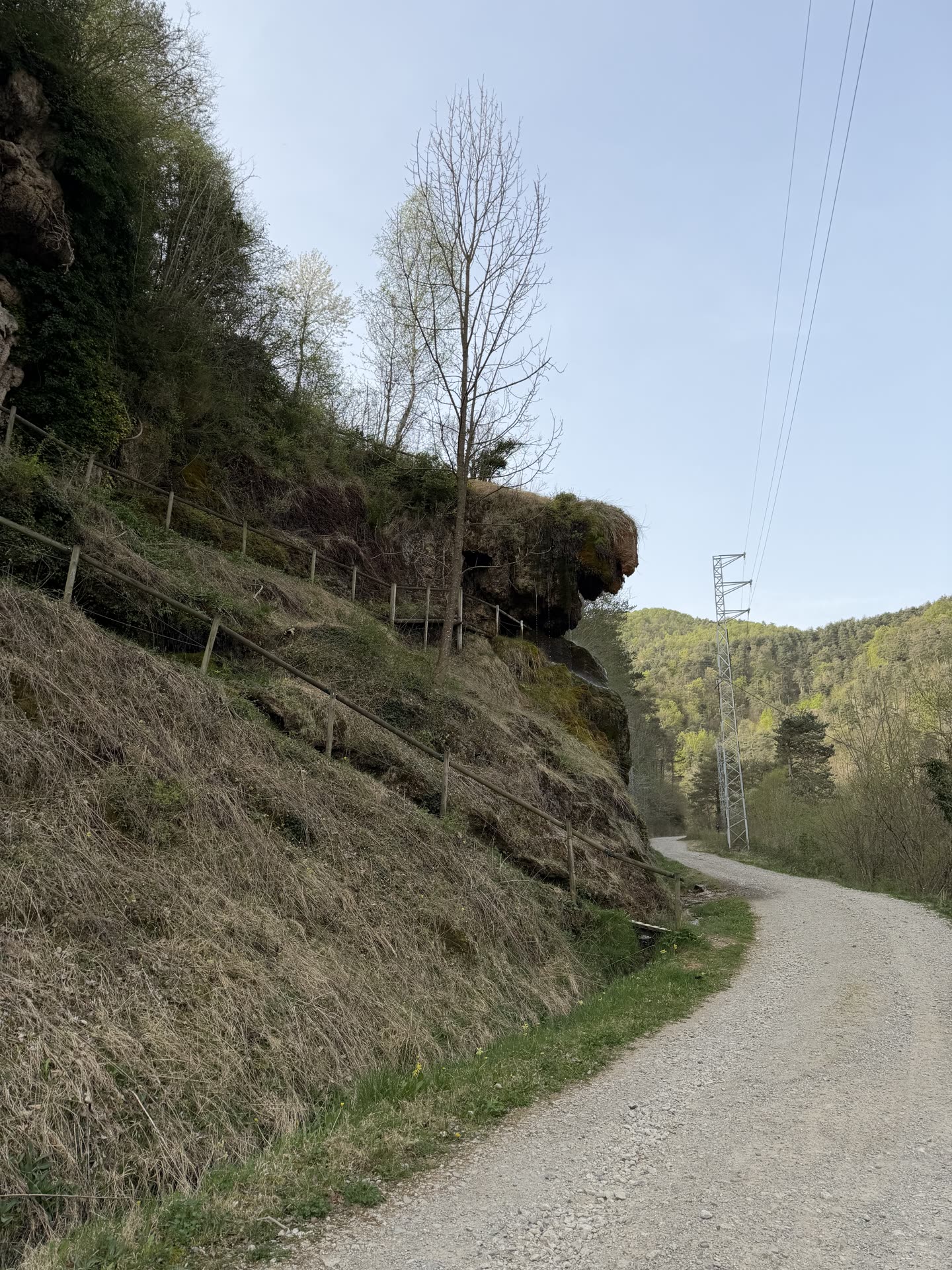
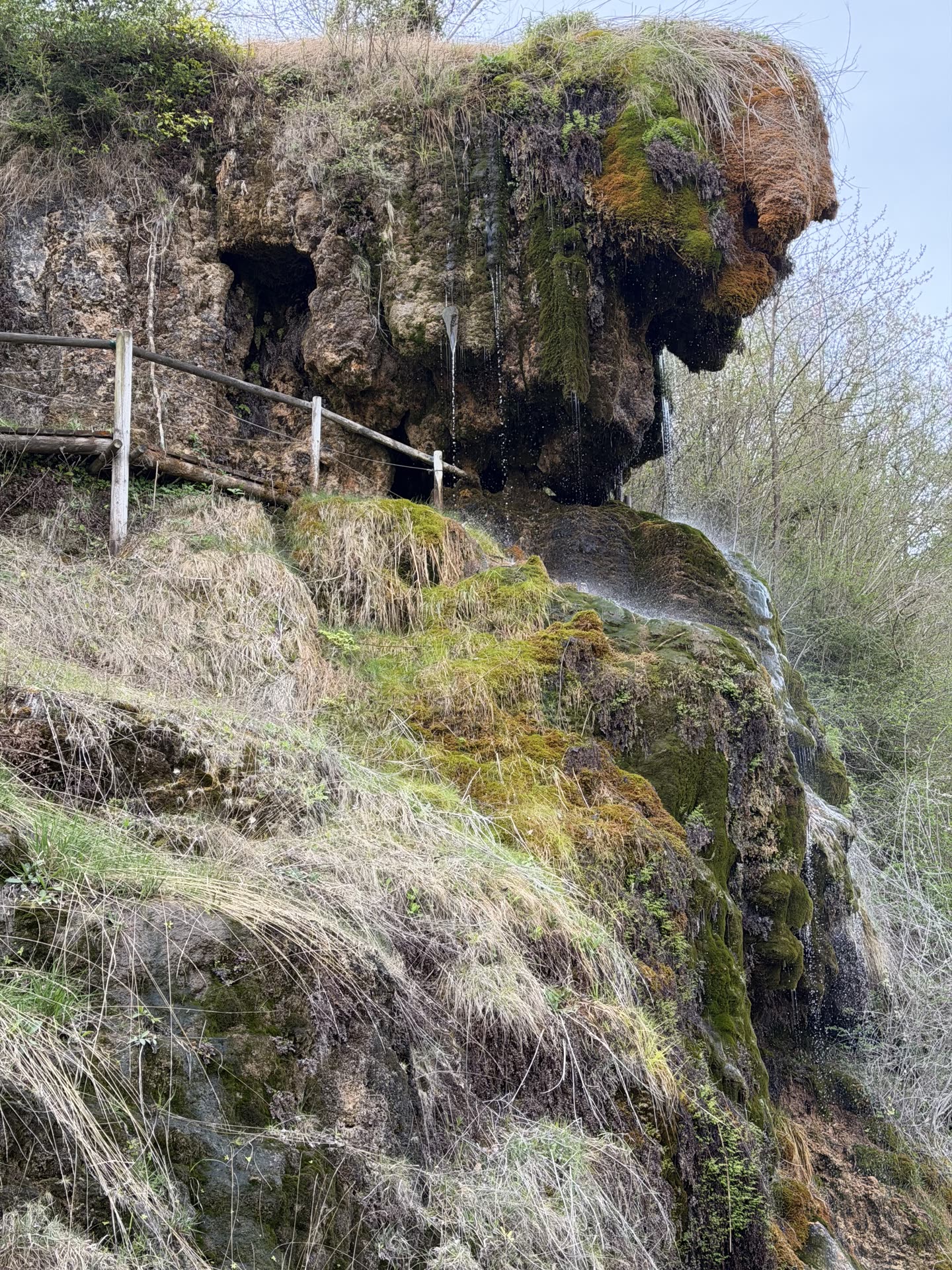
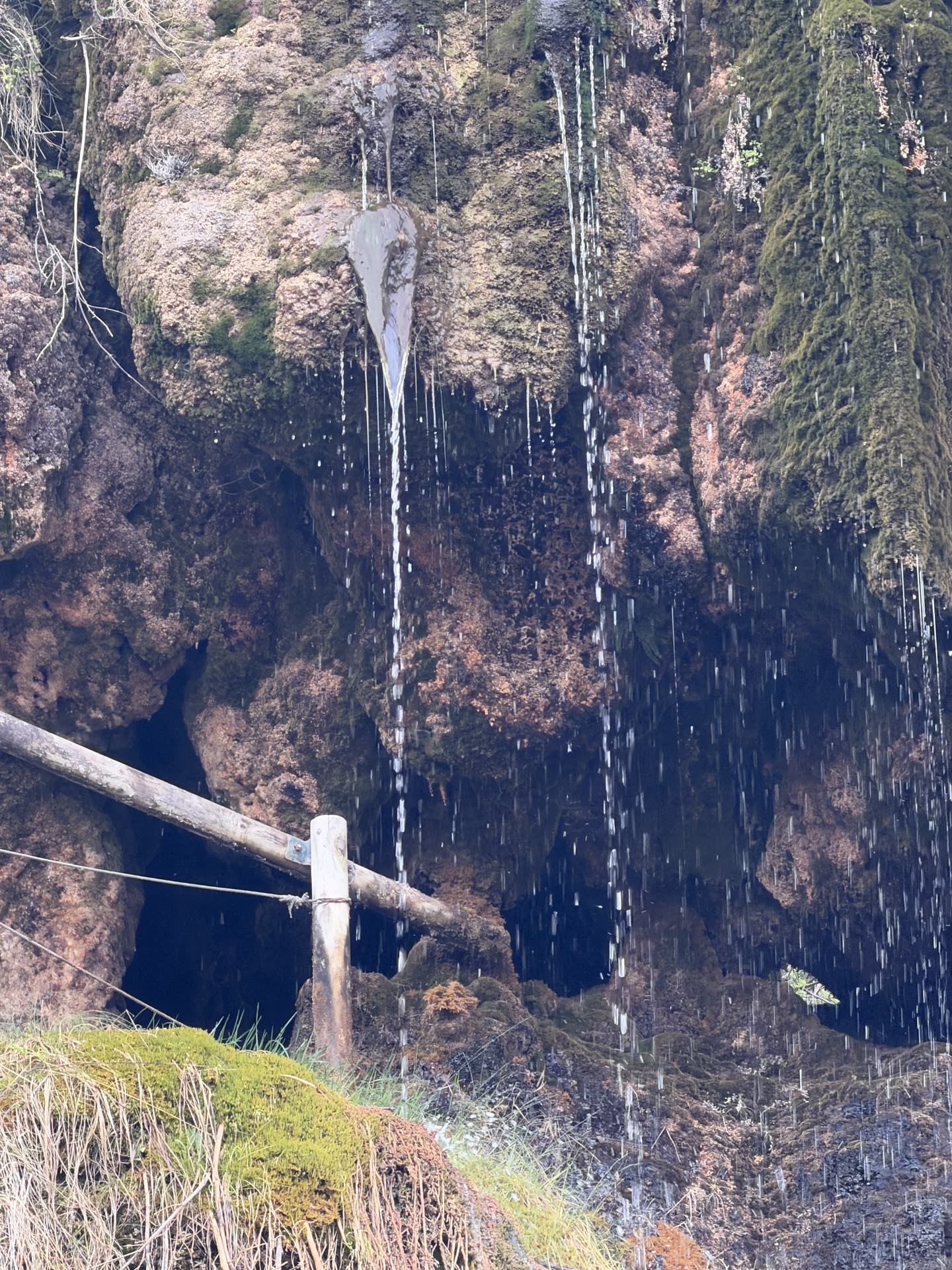
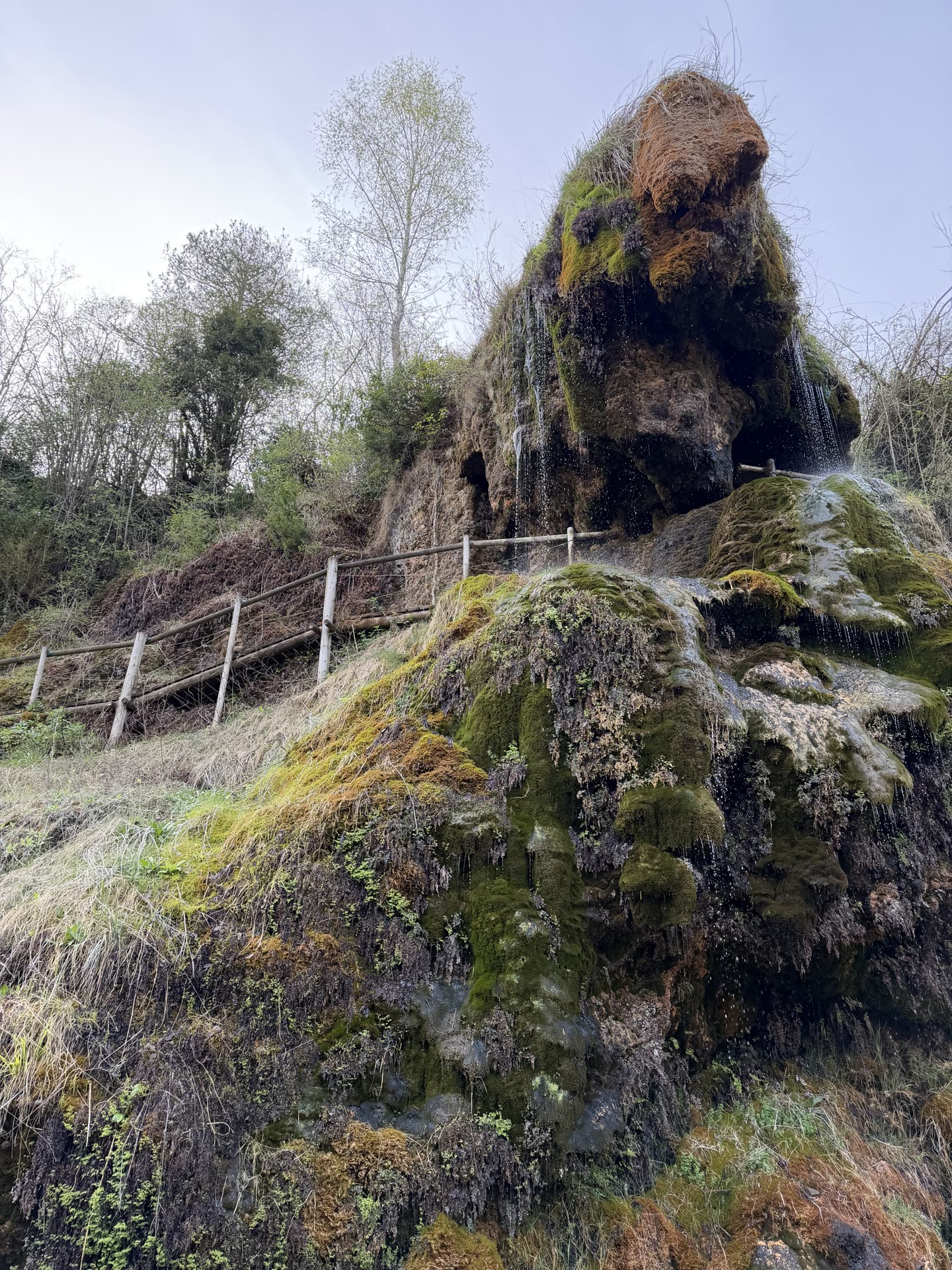
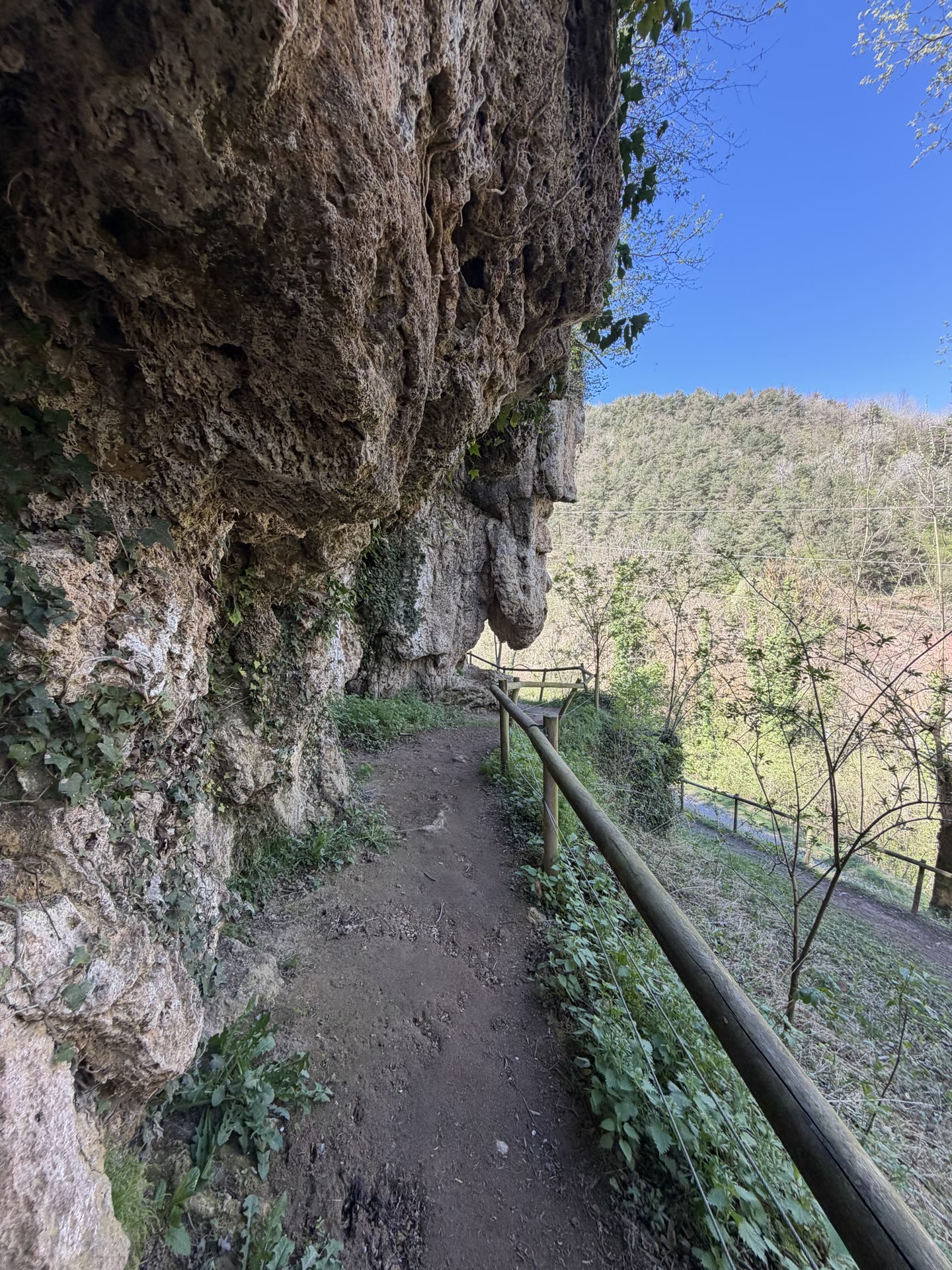
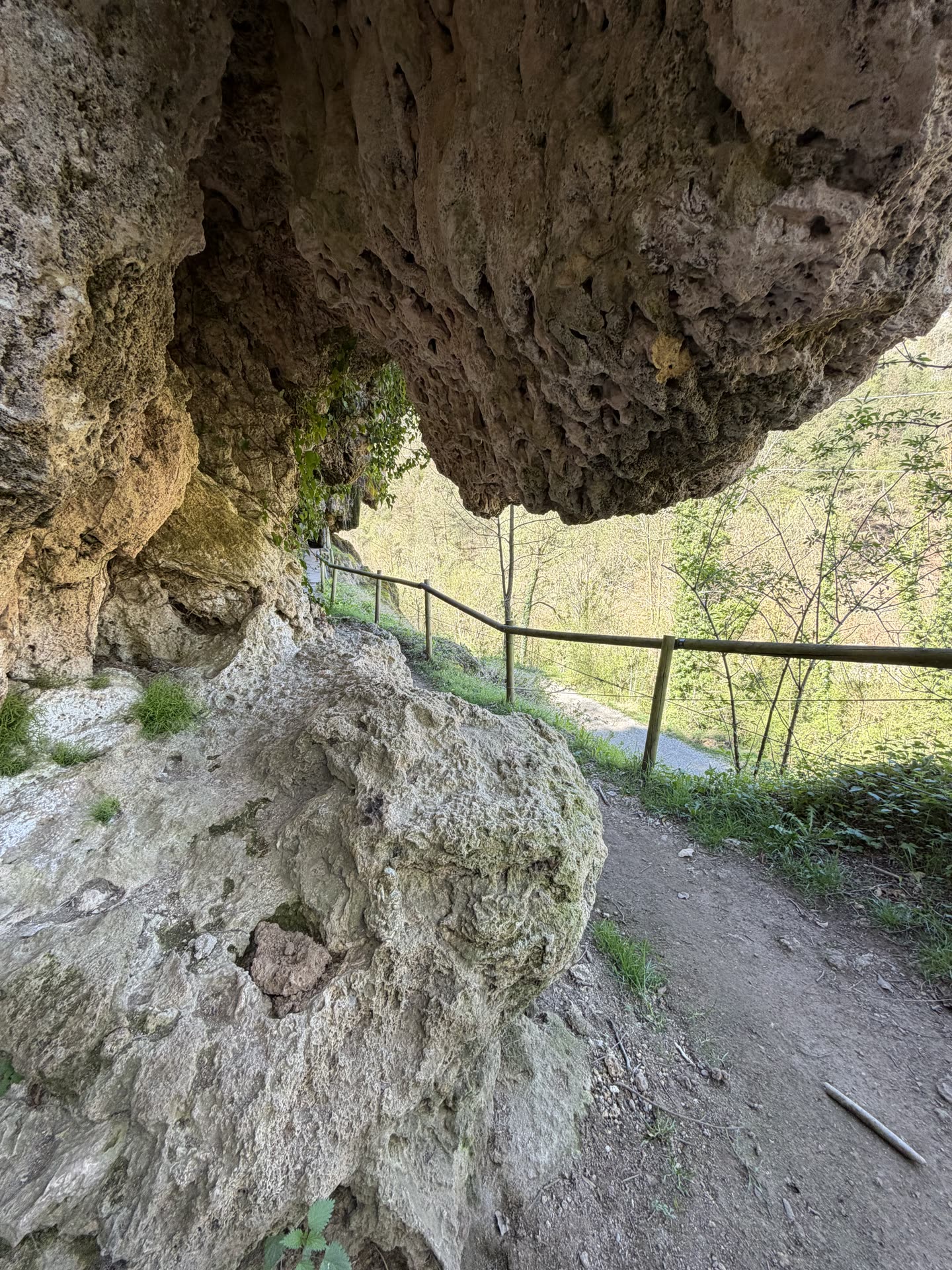
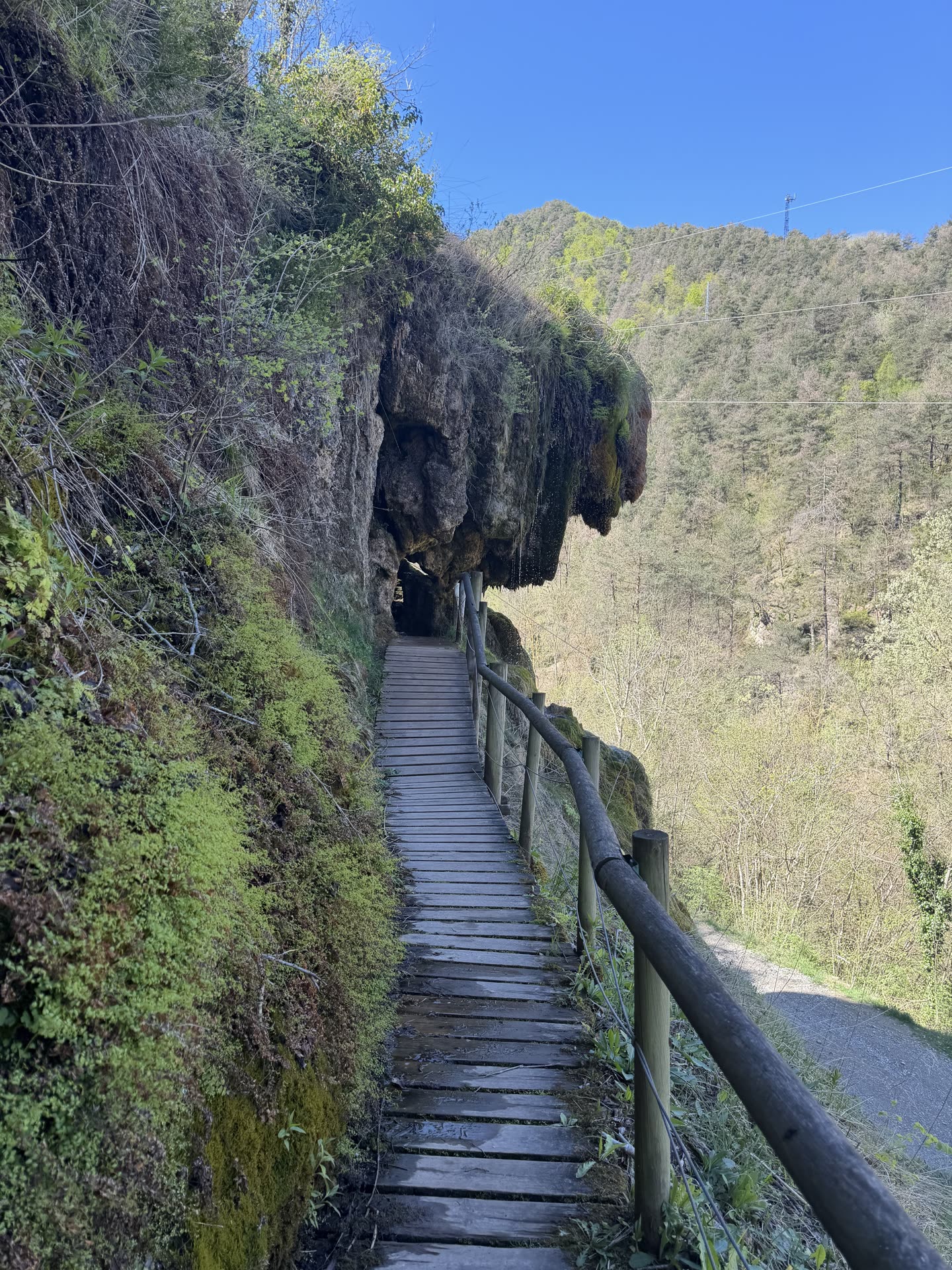
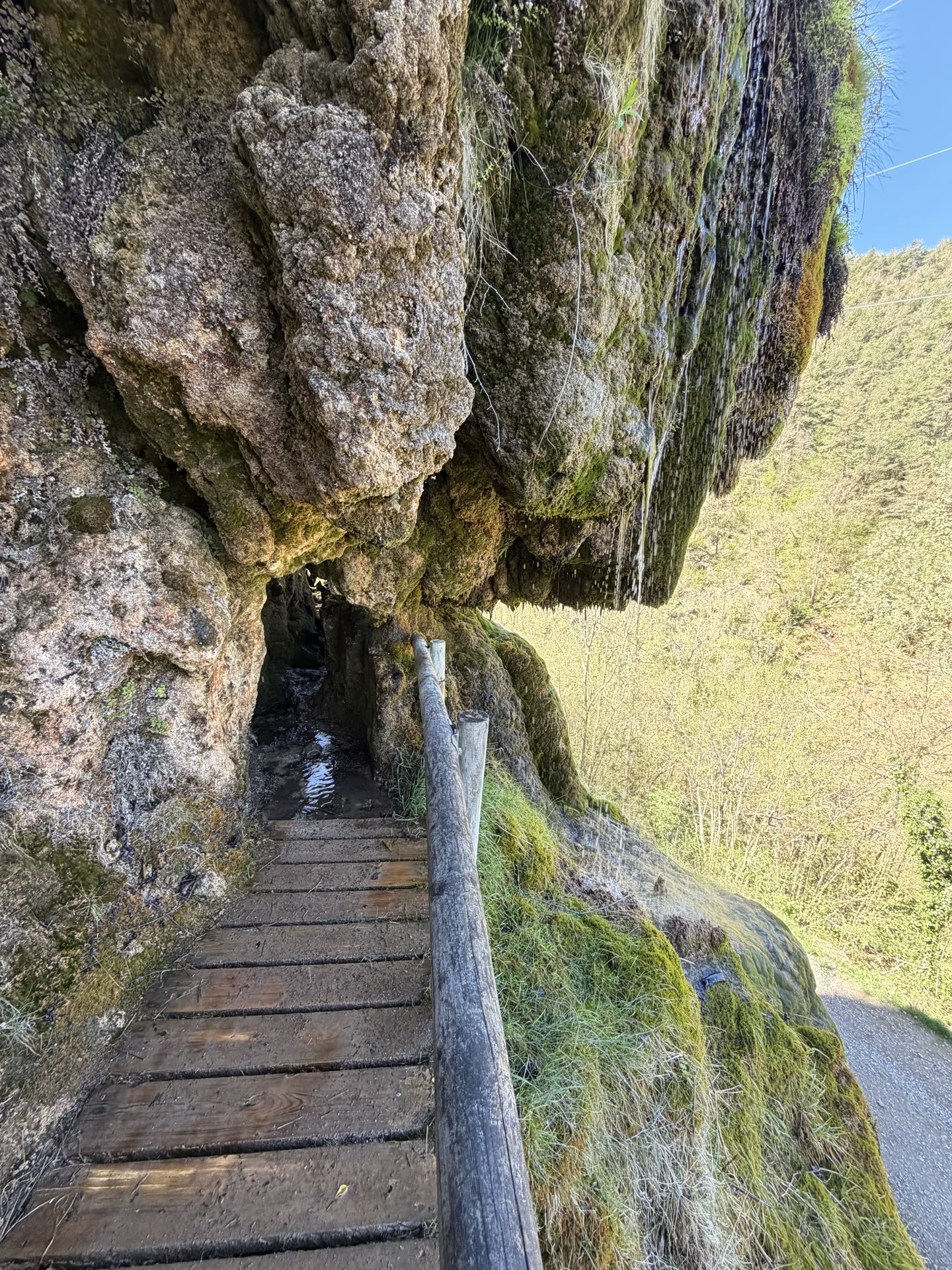
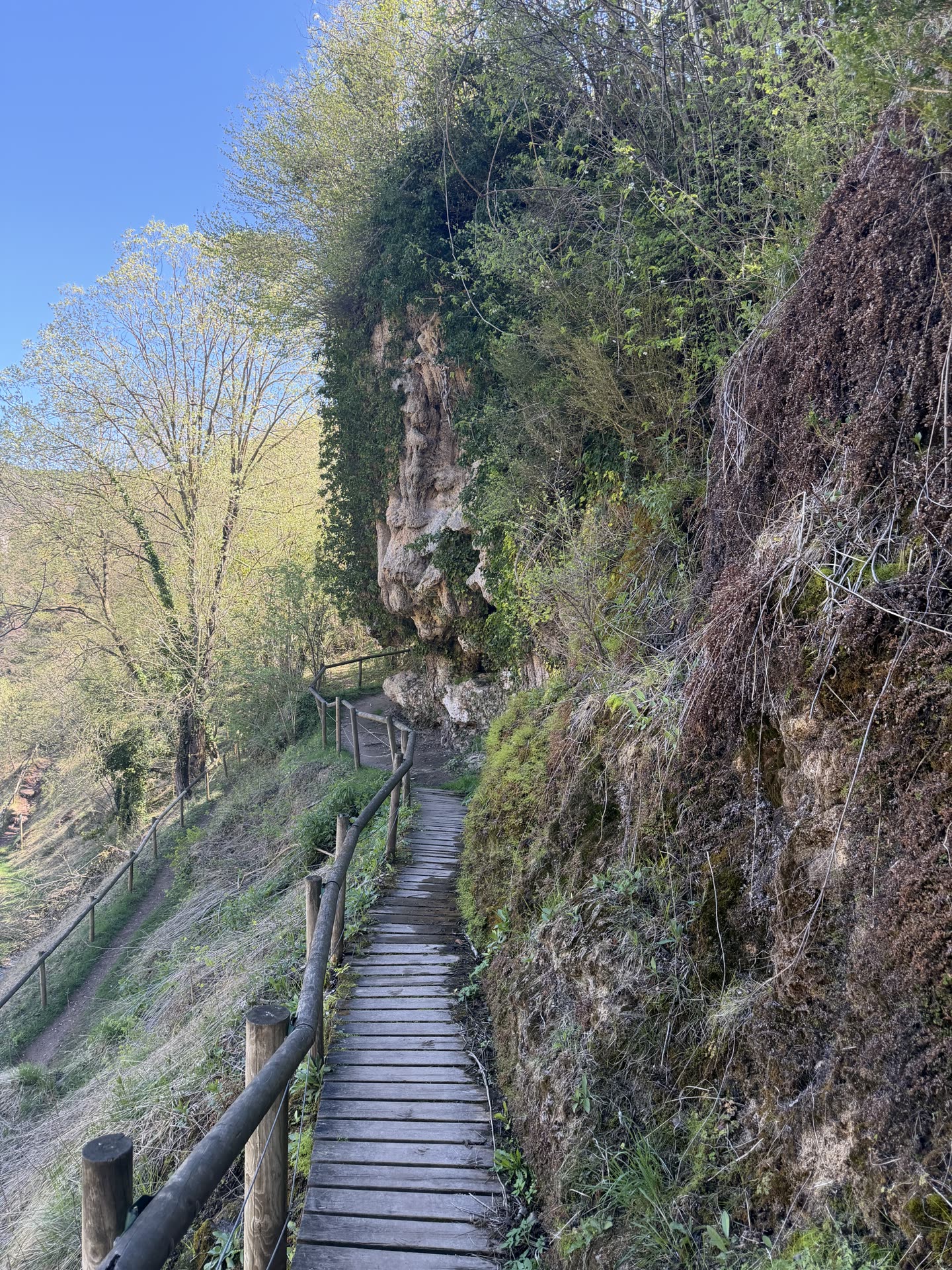
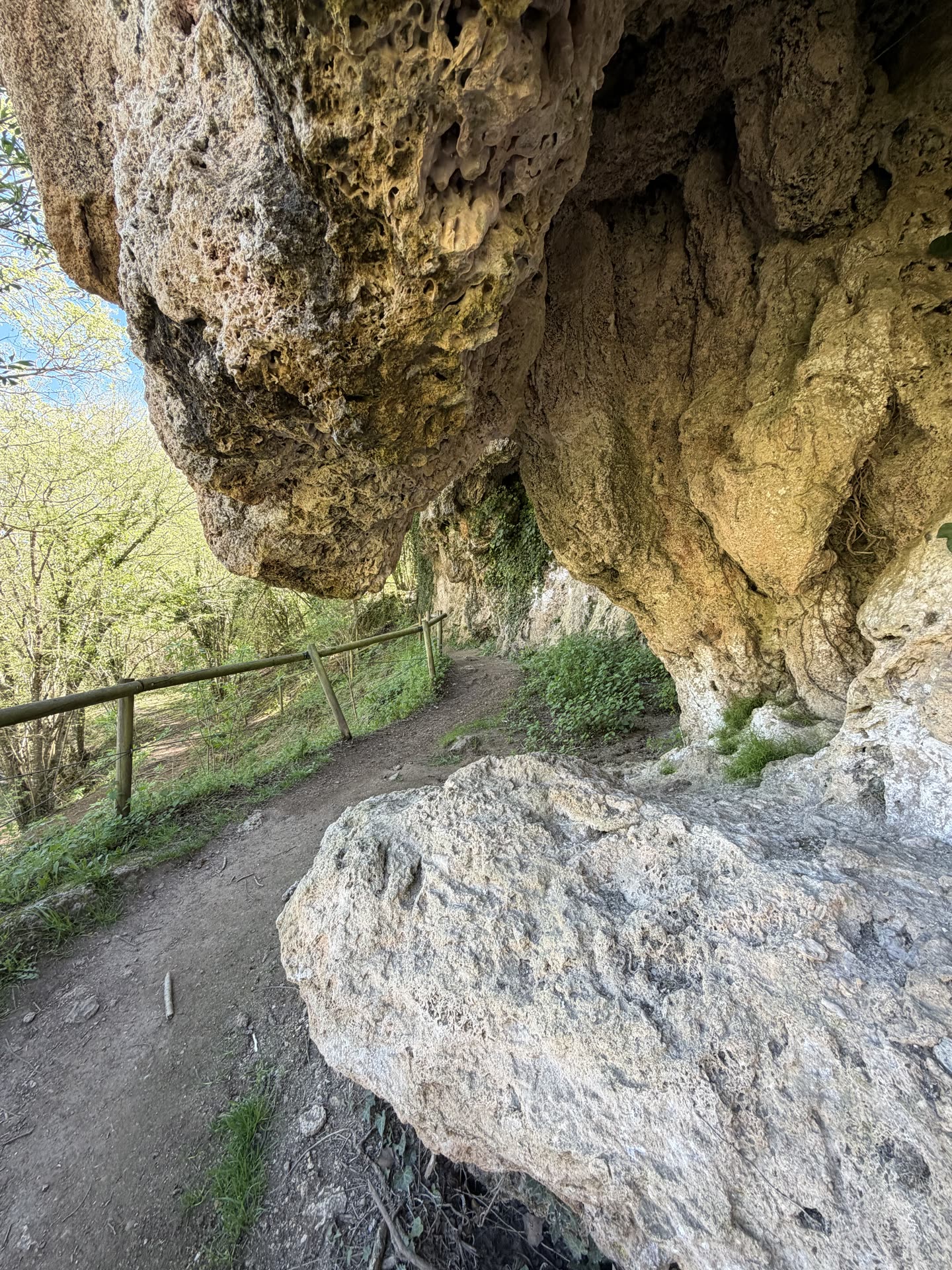
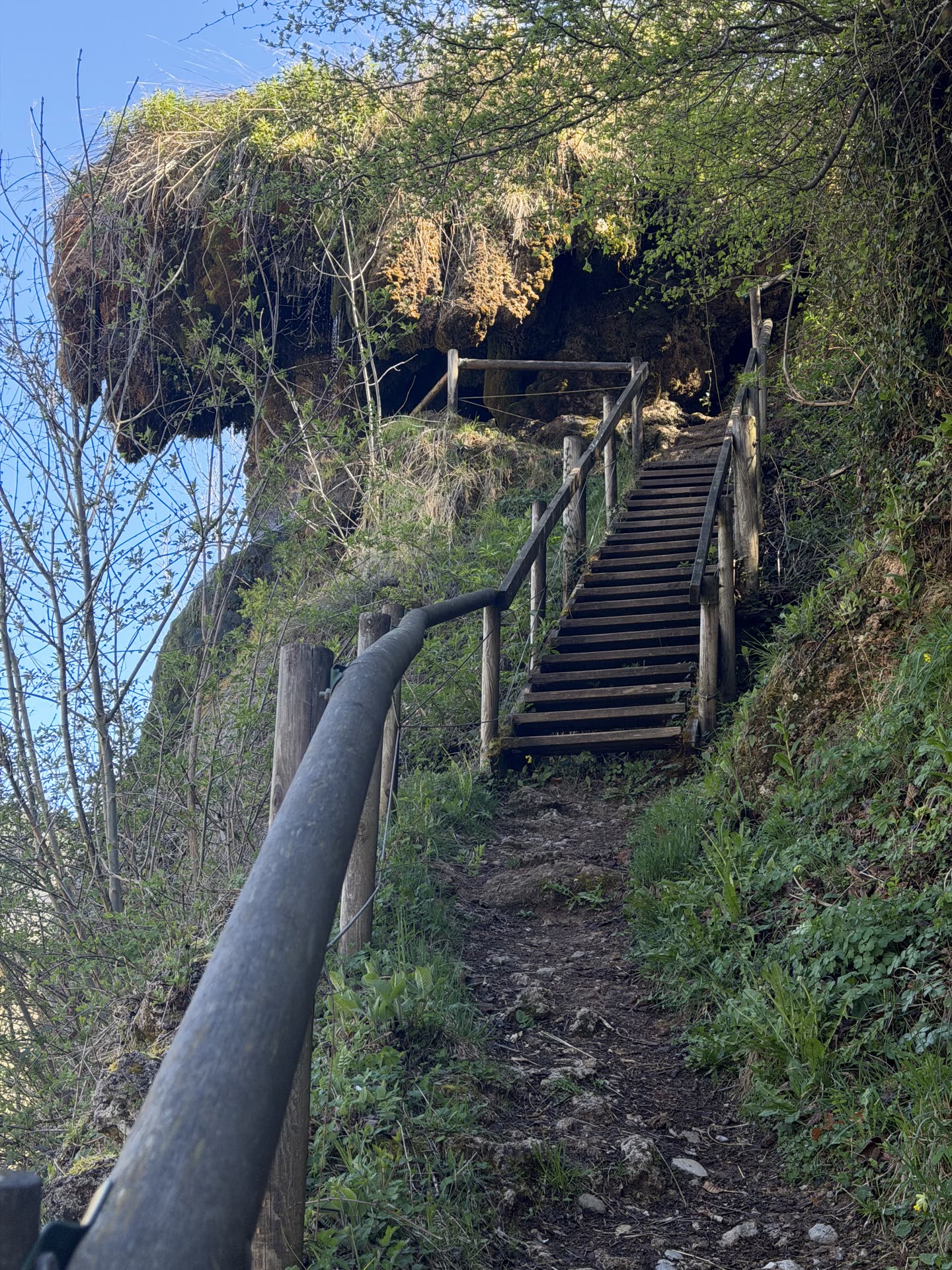
The Font de la Tosca, or Tosca del Pinetar, is a rock formation that includes a waterfall. Several tens of metres thick, it has built up over the centuries through the slow, continuous deposition of calcium carbonate dissolved in the water flowing from the spring.

Have a great day — enjoy the walk!
The Vallfogona passport
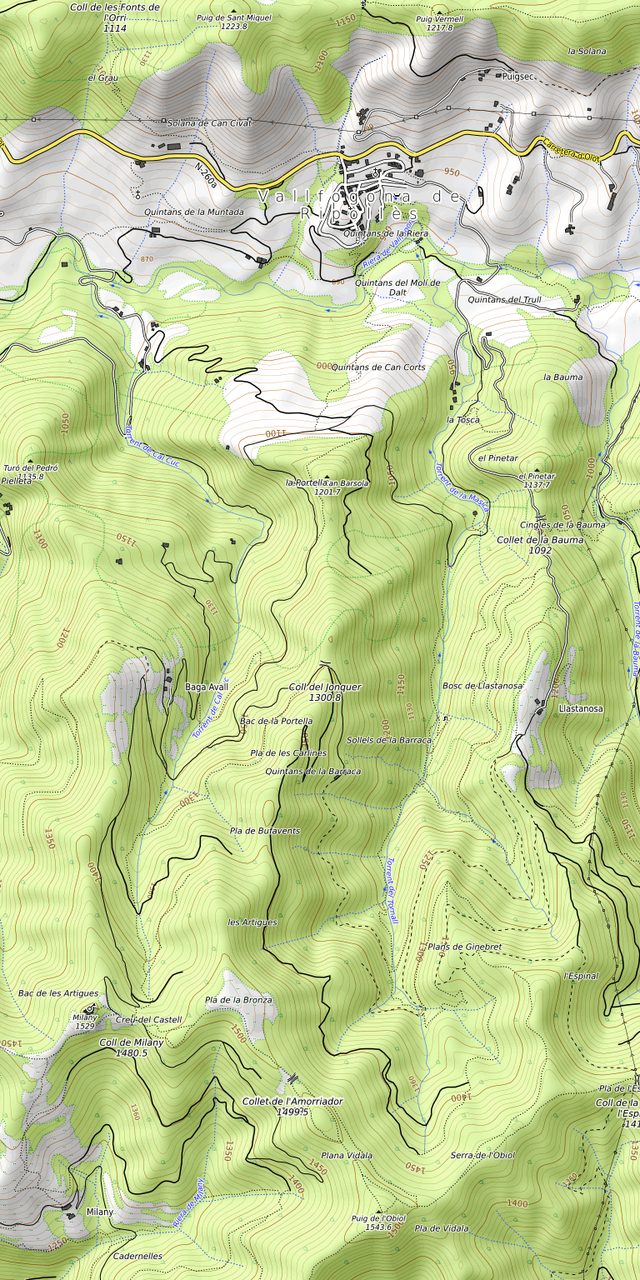
Out and back from Vallfogona to Milany Castle — a gentle, steady climb the e-bike makes easy. Magnificent views over the valley and the Pre-Pyrenees from the top. Return by the same track.

A circular e-MTB route linking Vallfogona with Ogassa and the Serra Cavallera. We leave Vallfogona and drop down the Ripoll road to the Samala bridge; there we pick up the concreted Les Llances track, which leads to Sant Joan de les Abadesses. We cross the town and follow the Ruta del Ferro (Iron Route) towards Ogassa, where we stop for an esmorzar de forquilla (a hearty fork breakfast) at Fonda Costa. Batteries recharged, we climb to Sant Martí d'Ogassa and ride the concreted Serra Cavallera track. We descend to Camprodon and return along the greenway to Sant Joan, where we rejoin the Les Llances track back to Vallfogona.
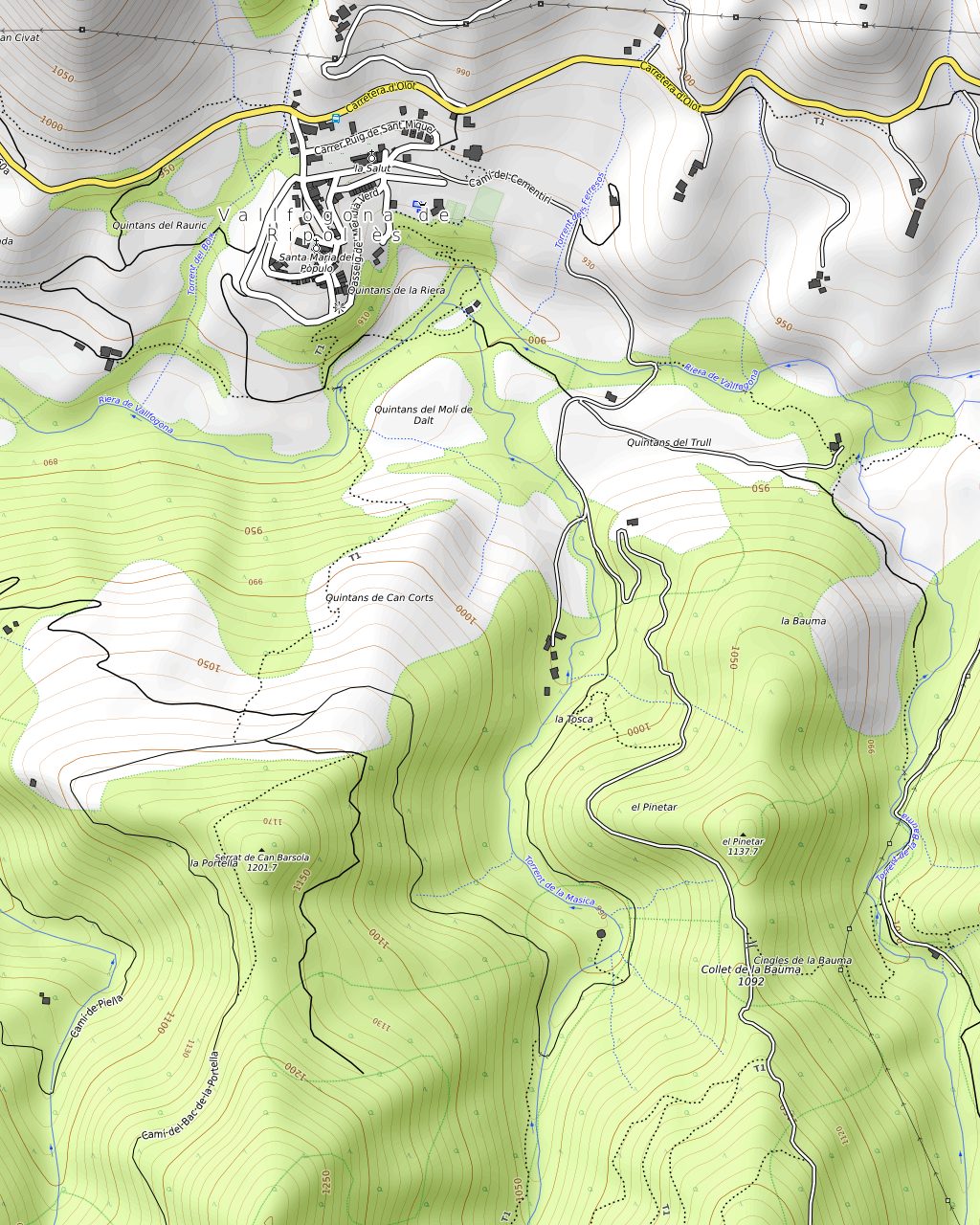
Start from the village square along the footpath to the medieval bridge. Across the bridge, the path climbs up to the forest track, with a magnificent view of the village. Head down the track, past the la Tosca waterfall, and return to the village along the concrete track.
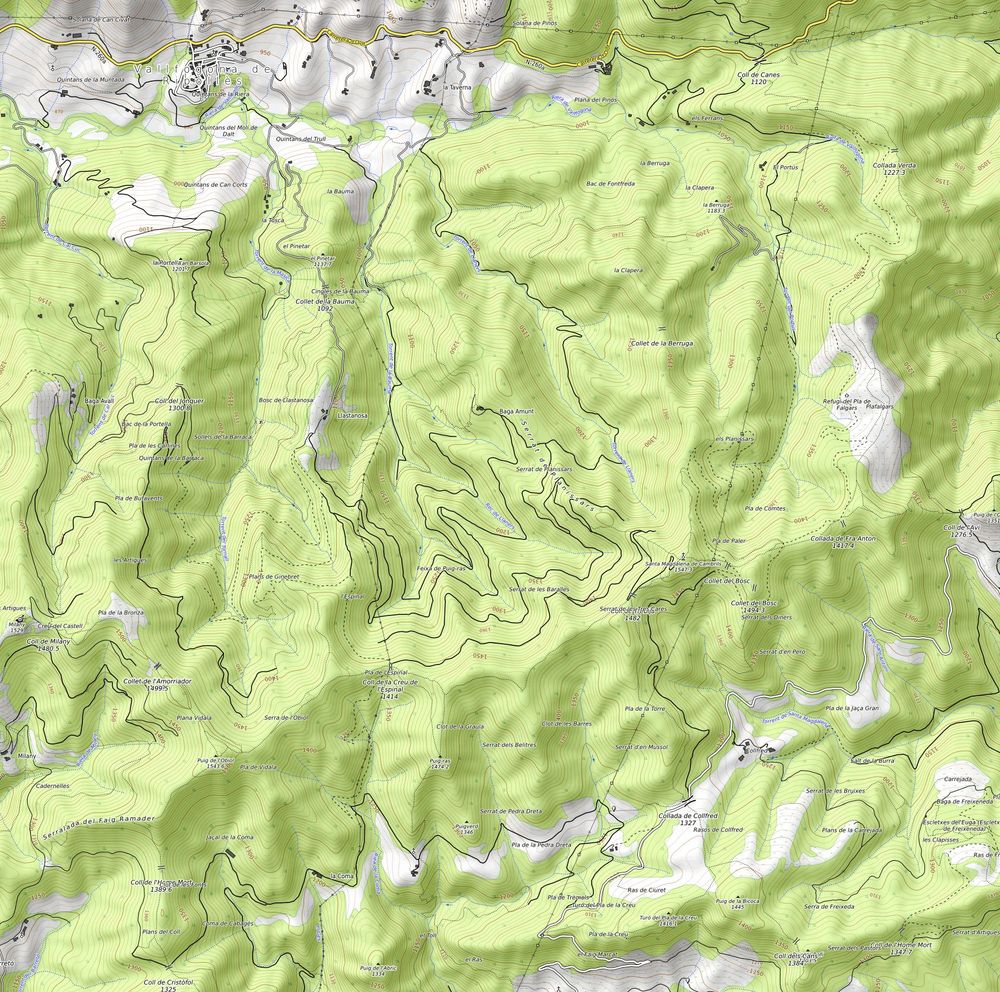
Leave Vallfogona climbing to Milany Castle, then drop to the Milany farmhouse on the far side. Without losing height, follow the path past the Santa Margarida de Cabagès hermitage until you join the Coll Fred road almost at the top. Past Coll Fred, descend one kilometre and take the right-hand turn to the Escletxes de la Freixeneda. Return to Coll Fred, take the Santa Magdalena path and come out on the road at Coll de Canes: from there, 4 km downhill back to Vallfogona.
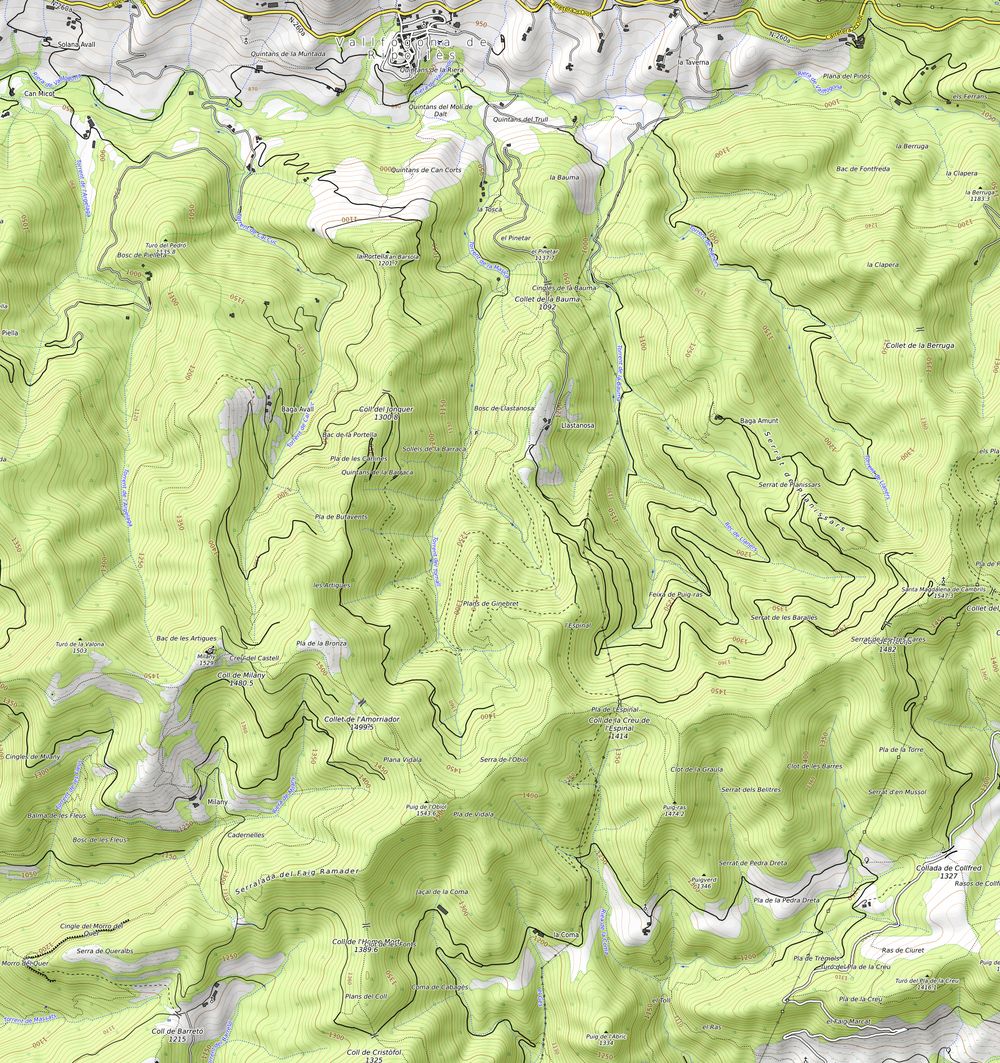
Leave Vallfogona climbing to Milany Castle, then drop to the Milany farmhouse. Continue to the Morro del Quer (1,241 m), a privileged viewpoint over the Milany range, and on to Santa Margarida de Cabagès, a 12th-century Romanesque chapel on a hilltop by the path to La Coma and Coll de Cristòfol. Join the Coll Fred road almost at the top and, at Coll Fred, take the path to the Santa Magdalena de Cambrils hermitage, at the top of its ridge (1,547 m), looking west to the Milany range and the Vidrà boundary. From there, downhill back to Vallfogona.
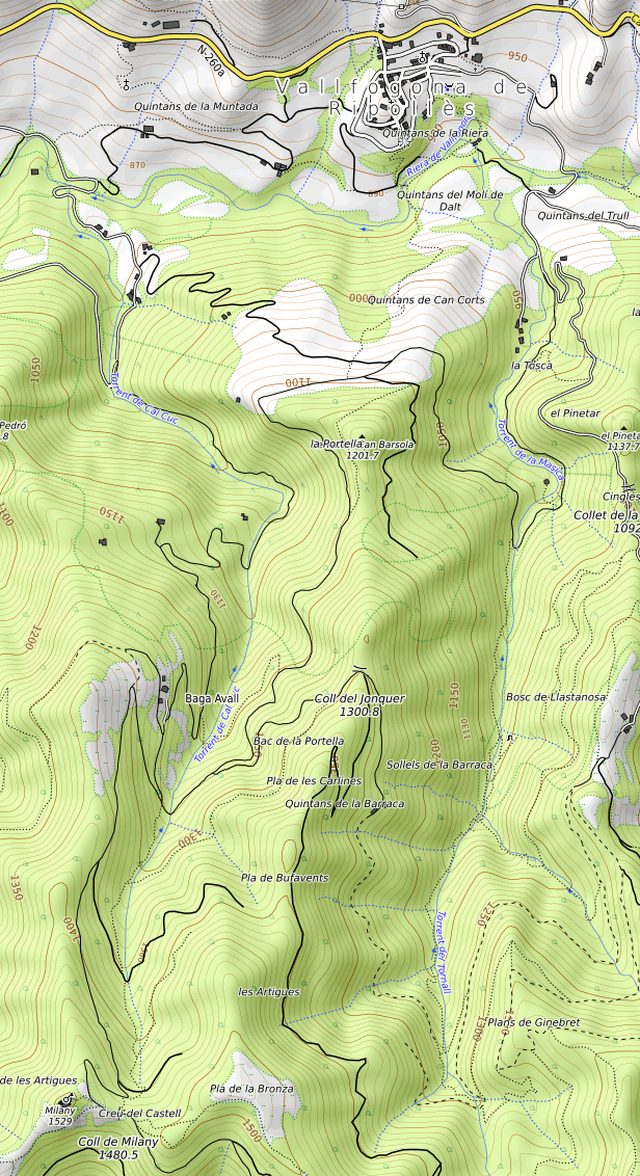
Leave Vallfogona on a path that drops to the stream and climbs up to the Milany forest track. At les Artigues, leave the track for the single path that climbs to Milany Castle (1,529 m), a lookout over the valley and the Pre-Pyrenees. The descent runs entirely on the forest track, entering Vallfogona on the concrete lane.
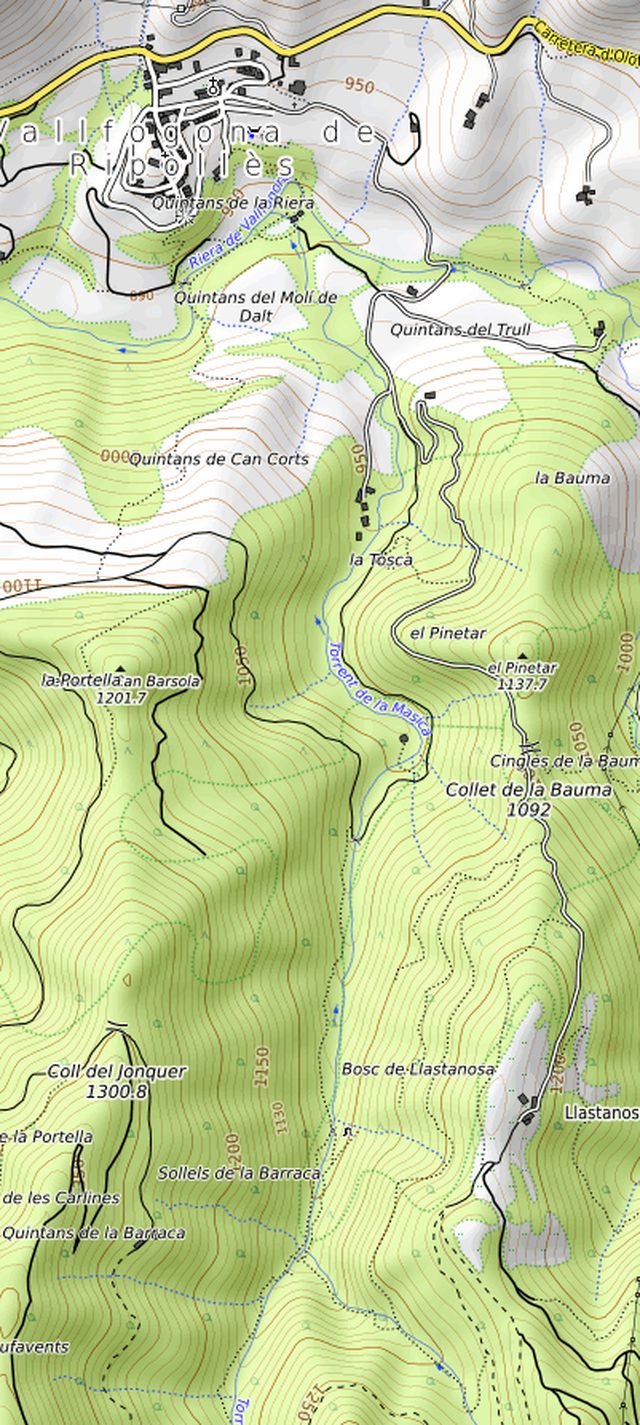
A loop over the Mont Rodolar, a natural-interest area of Vallfogona. Drop from the square to the medieval bridge and go down the forest track to the path that climbs along the Torrent de la Masica, with its waterfalls. The path crosses pine, beech and holly woods, passes the lime kilns, reaches the old tile works and then la Tosca and its spring. Back to Vallfogona along the track.
Other accommodation in Vallfogona: Can Puntí, M de Puigsec, Mas Regort, Can Mandena, Can Blau Rural, Càmping Mas la Bauma, Acampada Juvenil Ciutadia and Acampada Juvenil Plana Gran.